The Prep Talk: Why You Don't Need a Resolution, You Need a Rehearsal
The New Year brings a "layer cake" of emotions—excitement mixed with the crushing weight of expectation. Most people write resolutions. Professionals write "Prep Talks." Here is the art and science of strategic visualisation.

We celebrate the end of a year and welcome in a new one, but let’s be honest about what arrives with it. It isn't just a calendar change; it is a complex "layer cake" of thoughts, feelings, and emotions.
New job. New relationship. Starting fitness. Stopping alcohol. The pressure to reinvent yourself overnight is palpable. It can be exciting, yes, but it can also be incredibly overwhelming. When you try to focus on everything—the diet, the business, the side hustle, the mindfulness—you often end up focussing on nothing. The sheer volume of "newness" brings its own specific brand of stress and anxiety.
This year, I want to offer you a different approach. I don't want you to make a resolution. A resolution is often just a wish with a deadline attached. Instead, I want you to give yourself a "Prep Talk."
This isn't about magic. It is about the art and science of strategic focus. It is about taking the time to truly connect with yourself so you can architect the year ahead, not as a list of demands, but as a story you have already rehearsed.
The Architecture of a "Strategic Creative Story"
What is strategic visualisation? Strategic visualisation is the deliberate practice of mentally rehearsing future scenarios—both challenges and victories—to prepare the nervous system for action.
I rehearse everything. Well, almost everything. Before any significant event, I like to visualise a mix of scenarios. This isn't day-dreaming; it is a functional tool. It helps me play out a situation even if it never actually happens.
In the safety of my own imagination, I get to face my fears. At the time, inside my head, those fears feel real. My heart rate might elevate; I might feel the tension. But because I am the architect of the moment, I can process those thoughts, feelings, and emotions without consequence. They become strategic creative stories.
When I do this, something profound happens. The visualisation becomes my reality in those moments. By the time I step into the real arena—whether it’s a business meeting or a physical challenge—I have already been there. I have already survived the fear. I have already felt the rush of the win.
This connects directly to the Belief pillar of The Bar Raiser Mindset. You cannot simply "believe" in a vacuum; you must build the evidence. Visualisation allows you to build that evidence internally before the external world catches up.
Stoicism & The Art of Focus
We often think of Stoicism as the "stiff upper lip"—enduring pain without complaint. But true Stoic philosophy is much more about Prosochi, or "attention." It is the discipline of knowing exactly where to look.
The Stoics practiced Premeditatio Malorum (the premeditation of evils) to prepare for difficulty. In our "Prep Talk," we borrow this architecture but expand the lens. We aren't just looking for what could go wrong; we are looking for our "True North."
Seneca famously said, "If a man knows not to which port he sails, no wind is favorable."
Most New Year's resolutions fail because they are just creating wind—more effort, more grinding, more busyness. But they lack a port. Strategic visualisation is the act of setting your sail. It is the pause that ensures all that effort is actually taking you somewhere you want to go.
The "One Thing" Rule (Reducing The Overwhelm)
How do we reduce the overwhelm of the New Year? We must recognise that clarity reduces anxiety. When we try to manifest twenty different changes at once, our focus becomes diluted.
For my neurodivergent brain (and honestly, for any high-performing human in the modern world), a long list of goals is a recipe for paralysis. Focussing on everything is, effectively, focussing on nothing.
To combat this, I use a simple system:
- 1️⃣ The "Ideas 💡" Doc: I have a Google Doc literally called "Ideas 💡". This is my parking lot. Every goal, every project, every terrifying ambition goes in here. Writing it down signals to my brain: "It is safe. You won't forget this. You don't have to hold this loop open anymore."
- 2️⃣ The Daily Task: From that massive list, I choose one thing. Just one. This becomes a macro title and description in my daily calendar. It is a constant, singular reminder of my focus.
From Visualisation to Reality (The How-To)

1️⃣ Clear the Fog
You cannot architect a clear future with a cluttered mind. Before you visualise, you must regulate. Spend five minutes using a grounding technique or breathwork to bring your nervous system back to baseline.
- Recommended Article: The Double Five (5-5) Breath: Your Pocket Tool for Instant Calm and Sharpened Focus
2️⃣ The Rehearsal
Close your eyes. Don't just "think" about your goal—feel it. If your goal is to start a business, visualise the difficult email you have to send. Visualise the fear. Then, visualise yourself sending it anyway. Visualise the "rush" of the success. Make it high-definition.
- Recommended Article: Manifestation Demystified: A Practical Guide to Creating the Life You Envision
3️⃣ The Lead Domino
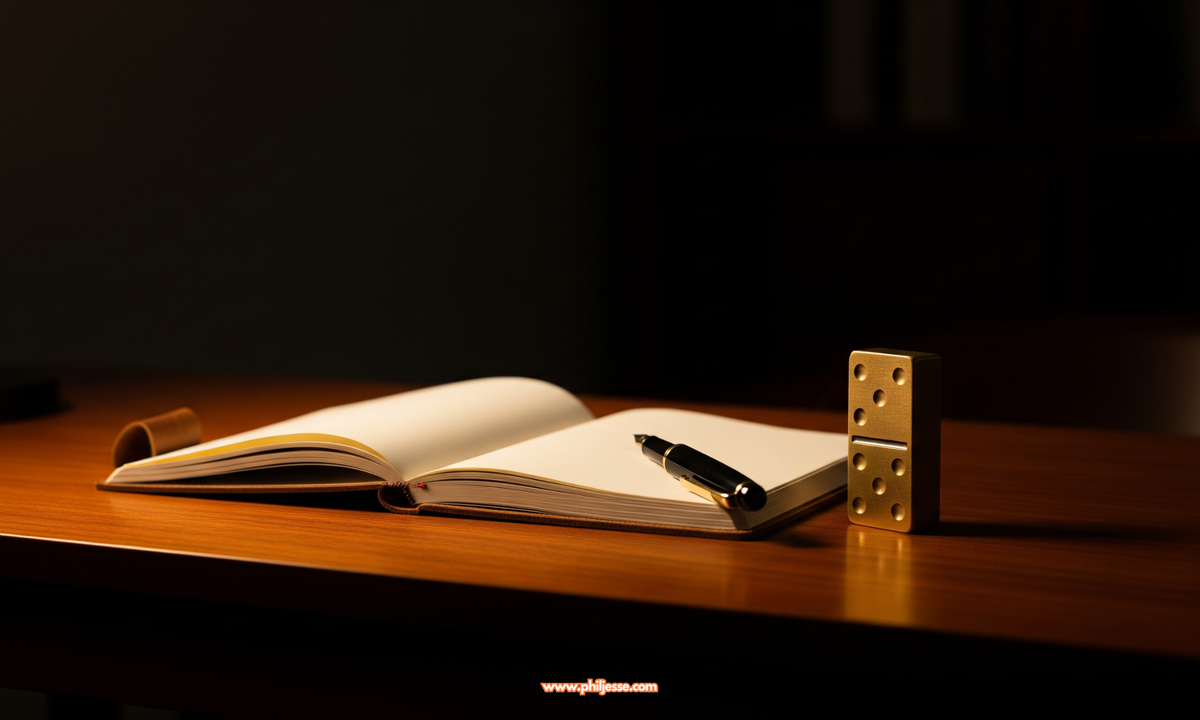
Open your "Ideas 💡" document (or journal). Dump everything out of your head. Then, look at the list and ask: "Which one of these, if achieved, makes the others easier or unnecessary?" That is your One Thing. Put that—and only that—on your calendar for tomorrow.
Every Day is Day 1
The beauty of the Prep Talk is that it isn't restricted to January 1st. The calendar is a tool, not a cage.
If you fall off the wagon in February, you don't have to wait for next year. You simply pause, clear the fog, run the rehearsal again, and reset your focus.
The future isn't something that happens to you. It is a story you are writing, strategically and creatively, right now.
Be the architect.
Frequently Asked Questions (FAQs)
What is strategic visualisation?
Strategic visualisation is the practice of mentally rehearsing specific scenarios—both challenges and successes—in high detail. Unlike passive daydreaming, it is an active technique used to prepare the nervous system, process emotions, and improve performance in real-world situations.
How does visualisation help with anxiety?
Visualisation helps with anxiety by allowing you to face fears in a safe, controlled environment (your imagination). By processing the emotions associated with a stressful event beforehand, you desensitise the brain's fear response, making the actual event feel more familiar and manageable.
Can visualisation help achieve goals?
Yes, visualisation supports goal achievement by priming the brain's reticular activating system (RAS) to spot opportunities aligned with your focus. When combined with practical systems—like the "One Thing" rule—it bridges the gap between abstract intention and concrete action.
The principles discussed are not a substitute for professional advice. Individual results from applying these concepts will vary, as your unique path, choices, and consistent efforts play the most significant role in your experiences. If you require guidance regarding specific personal, financial, medical, or mental health situations, please consult with a qualified professional. Please engage with these ideas responsibly, understanding that you are the architect of your choices and actions.