The Biological Moat: How to Biohack Your Neurochemistry Natively
The wellness industry wants you to buy your neurochemistry. But true biohacking isn't found in a prescription; it's forged in the silence between a breath and a physical rep. While you scroll for cheap dopamine, your highest focus is stolen. Here's how to manufacture your own.


We live in an era of outsourcing. We outsource our memory to search engines, our navigation to GPS, and increasingly, our executive function to algorithms. But the most damaging form of modern outsourcing is the delegation of our internal state.
The wellness industry has convinced us that focus, calm, and resilience are commodities to be purchased. We are sold the idea that we must consume external inputs—be it a synthetic supplement, an app subscription, or an endless feed of digital content—to alter our neurochemistry.
But true biological autonomy is not bought over the counter. It is engineered from within. You possess a complex, highly adaptable operating system. The question is not whether your neurochemistry is being hacked, but rather: who is writing the code?
Are you allowing the modern attention economy to hijack your dopamine, or are you stepping into the arena to manufacture your own chemical stack?
What is Natural Biohacking?
Natural biohacking is the intentional practice of regulating your nervous system and manipulating your internal neurochemistry through physical exertion, deliberate breathwork, and environmental controls, allowing you to achieve peak cognitive focus and physical resilience without relying on external or synthetic inputs.
The Laboratory of the Mind vs. The Textbook

There is a profound difference between intellectualising biology and experiencing it.
You can read an entire library of academic textbooks on how neurotransmitters function. You can study the precise mechanisms of how dopamine drives motivation, how endorphins mask physical pain, or how serotonin regulates mood. It is valuable knowledge. But reading about the operating system is not the same as having root access to the code.
Knowledge is passive; practice is active.
My understanding of human neurochemistry was not forged in a university lecture hall. It was built in what I call the Laboratory of the Mind. My laboratory happens to be a steel pull-up bar.
When you study the science of human endurance, you learn the theory of adaptation. When you execute 100,000 pull-ups in a single year, you live the adaptation. You feel the exact moment the friction in your mind screams at you to stop, and you learn the precise neuro-somatic mechanism required to override that panic. You learn how to manually signal safety to a nervous system that is convinced it is under threat.
Theorists write from a place of observation. Practitioners write from a place of execution. If you want to truly biohack your neurochemistry, you have to be willing to leave the textbook behind and step into the friction.
The Gym Floor Contrast: The Great Dopamine Heist
The modern gym floor is a fascinating sociological study in how we mismanage our internal operating systems.
I see it every single day. A person finishes a heavy set of squats. Their heart rate is elevated, their nervous system is heightened, and their body is primed for a brief period of physiological recovery. What do they do in those crucial moments of rest?
They pull out their phone.
They immediately begin scrolling through social media, answering emails, or consuming fragmented digital noise. They believe they are resting because their muscles have stopped moving, but biologically, they are committing a cognitive heist.
Every swipe, every notification, every fractured piece of content demands a micro-decision from the brain. This erratic consumption erodes dopamine and taxes the prefrontal cortex. By the time they step back up to the barbell for their next set, their physical body might be rested, but their central nervous system is fatigued, and their focus is scattered. They are stealing their own drive.
When I take a break between sets, I am not looking at a screen. I am breathing.
I am actively engaging in deliberate, controlled respiration to lower my heart rate, manually shifting my nervous system from the sympathetic (fight or flight) state back toward the parasympathetic (rest and digest) state. I am creating a Mindset Reset in real-time.
While the scroller is depleting their neurochemistry, I am regulating mine. The difference between average performance and elite endurance is rarely found in the physical work itself; it is almost always found in how you manage the silence between the reps.
Endurance Training as an Endorphin Engine
We are taught that resistance training is a tool for building muscle and bone density. This is true, but it is a microscopic view of its potential. When you apply extreme volume to resistance training, it ceases to be just a physical workout; it becomes a neuro-somatic engine.
Consider my daily practice. While some might consider thirty pull-ups to be a challenging weekly target, my absolute minimum baseline is 100 pull-ups a day. Often, it is significantly more.
I do not train with this volume solely for physical strength. I am addicted to endurance training because of the internal environment it forces me to create. It is a calculated, deliberate biohack.
When you push the body past its perceived limits of comfort, you trigger a biological cascade. You force the release of endorphins to manage the discomfort. You cultivate a profound, sustained release of focus and clarity that lasts for hours after your hands leave the bar. You are essentially taking the hormones and neurotransmitters that people try to artificially stimulate with pills and energy drinks, and you are manufacturing them natively through sheer, disciplined effort.
True mastery takes time, especially when you are conditioning not just your muscles, but your mind's capacity to tolerate friction. Endurance training allows you to marinate in the benefits of this natural chemical release for prolonged periods. It is the ultimate expression of self-reliance.
Why Traditional Meditation Fails the "Tired but Wired" Mind
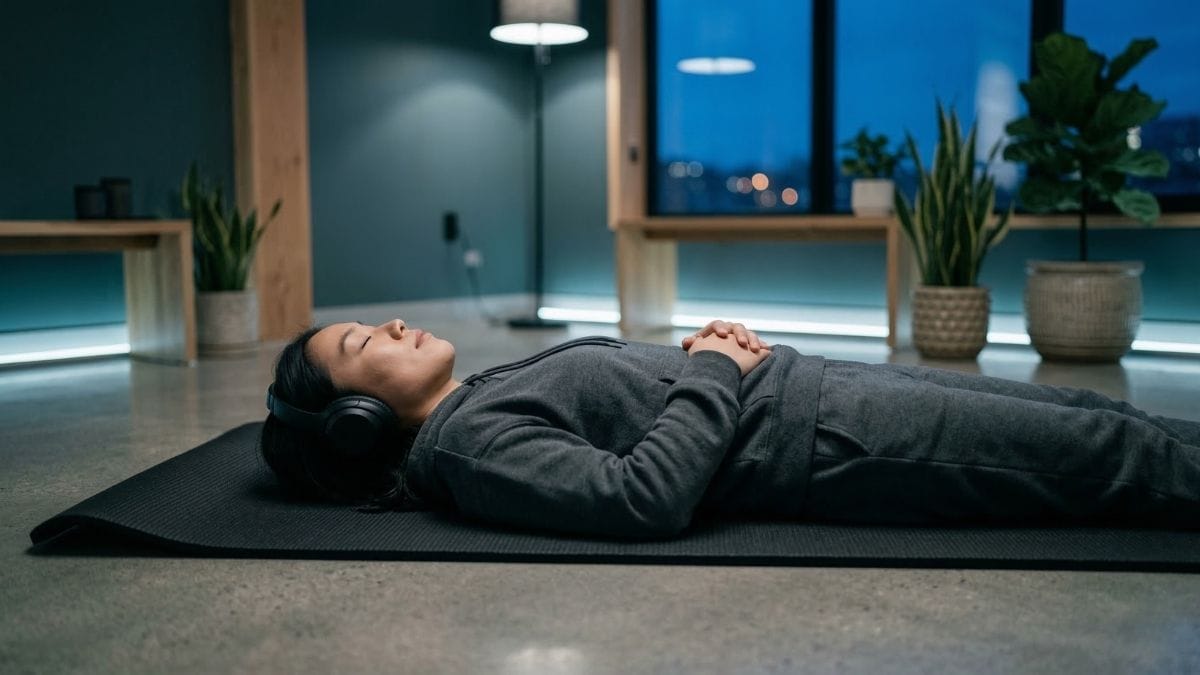
If high-volume physical training is the accelerator for our neurochemistry, then meditation is the brake pedal. But there is a profound misconception about what meditation actually is, and why it so often fails the people who need it most.
If you are an ambitious high performer, or if you navigate the world with a neurodivergent operating system (like my own AuDHD), the traditional advice to "just sit quietly and empty your mind" is not just unhelpful; it is actively counterproductive.
When your baseline state is hypervigilance, sitting in a silent room can feel like a threat to the nervous system. The lack of sensory input creates a vacuum, and an anxious mind will immediately rush to fill that vacuum with racing thoughts, worries, and physiological tension. If you have ever felt exposed, self-aware, or highly uncomfortable in a public meditation class, you are not alone, and it is not a character flaw. It is simply an executive function difference.
Meditation is not about forcing the mind to be empty. It is not about feeling sleepy, nor is it a mystical practice reserved for monks. It is a highly practical, neuro-somatic tool for actively signalling safety to a rigid nervous system.
When the mind cannot find stillness on its own, it requires an anchor. It requires a focal point to prevent it from spinning out into the void. This is precisely why guided practice is so critical.
The PMR Reset (A Guided Practice)
I create guided meditations specifically because I understand the necessity of that anchor. I understand that the algorithm of human connection requires a trusted voice to lead the way out of the noise.
If you are tired but wired, this 16-minute Progressive Muscle Relaxation (PMR) practice will manually discharge stored stress and calm a racing mind. By systematically tensing and releasing muscle groups, this somatic reset signals to your brain that the threat is over, allowing you to transition from a state of hypervigilance into deep, restorative safety.
Listen to the Guided Session Here:
This is not theory. This is the exact practitioner toolkit I use to manage my own neurodivergent mind and sustain extreme endurance. When you follow the sound of my voice in this practice, you are not trying to stop your thoughts; you are giving your nervous system a structured, physical task that naturally results in profound calm. You are hacking the system from the bottom up.
Reclaiming Your Biological Autonomy
We cannot control the velocity of the modern world. We cannot stop the endless stream of notifications, the demands of our careers, or the complexities of human relationships.
But we have absolute, undisputed jurisdiction over our internal response.
Every time you choose to breathe deliberately instead of reaching for your phone, you are reclaiming your autonomy. Every time you step up to the bar and push through the friction of another rep, you are manufacturing your own resilience. Every time you sit down to consciously discharge the tension in your muscles, you are rewriting the code of your operating system.
The algorithms are designed to keep you addicted, distracted, and reliant on external inputs for your sense of wellbeing. But the algorithm cannot hear your heartbeat. It does not understand the profound, quiet strength of a regulated mind.
Stop giving away your neurochemistry to a screen. Step into your own laboratory. Do the work, feel the friction, and build a biological moat so deep that the chaos of the outside world simply cannot cross it.
Frequently Asked Questions (FAQs)
How can I naturally regulate my nervous system?
Natural nervous system regulation involves shifting from a sympathetic (fight or flight) state to a parasympathetic (rest and digest) state. This can be achieved through deliberate practices like Progressive Muscle Relaxation (PMR), controlled breathwork (such as the Double Five breath), and physical exercise that safely processes built-up adrenaline and cortisol.
What is the difference between biohacking and neuro-somatics?
While commercial biohacking often focuses on external gadgets, supplements, and data tracking to optimise biology, neuro-somatics is the practice of using the mind-body connection—through movement, breath, and spatial awareness—to manually regulate the nervous system and alter your biological state from within.
Why does scrolling on my phone make me feel tired?
Mindless scrolling demands constant micro-decisions and task-switching from your brain. This erratic consumption provides cheap, fleeting spikes of dopamine, followed by rapid crashes. This process heavily taxes your prefrontal cortex, leading to cognitive fatigue, reduced attention span, and a feeling of being "tired but wired."
The principles discussed are not a substitute for professional advice. Individual results from applying these concepts will vary, as your unique path, choices, and consistent efforts play the most significant role in your experiences. If you require guidance regarding specific personal, financial, medical, or mental health situations, please consult with a qualified professional. Please engage with these ideas responsibly, understanding that you are the architect of your choices and actions.