The Regulated Self: Why Your Wearable Is a Dashboard, Not a Steering Wheel
We are drowning in biometric data but starving for actual regulation. Your wearable is excellent at diagnosing stress, but it cannot fix it. Here is why the frontier of high performance isn't tracking your nervous system—it is manually overriding it.

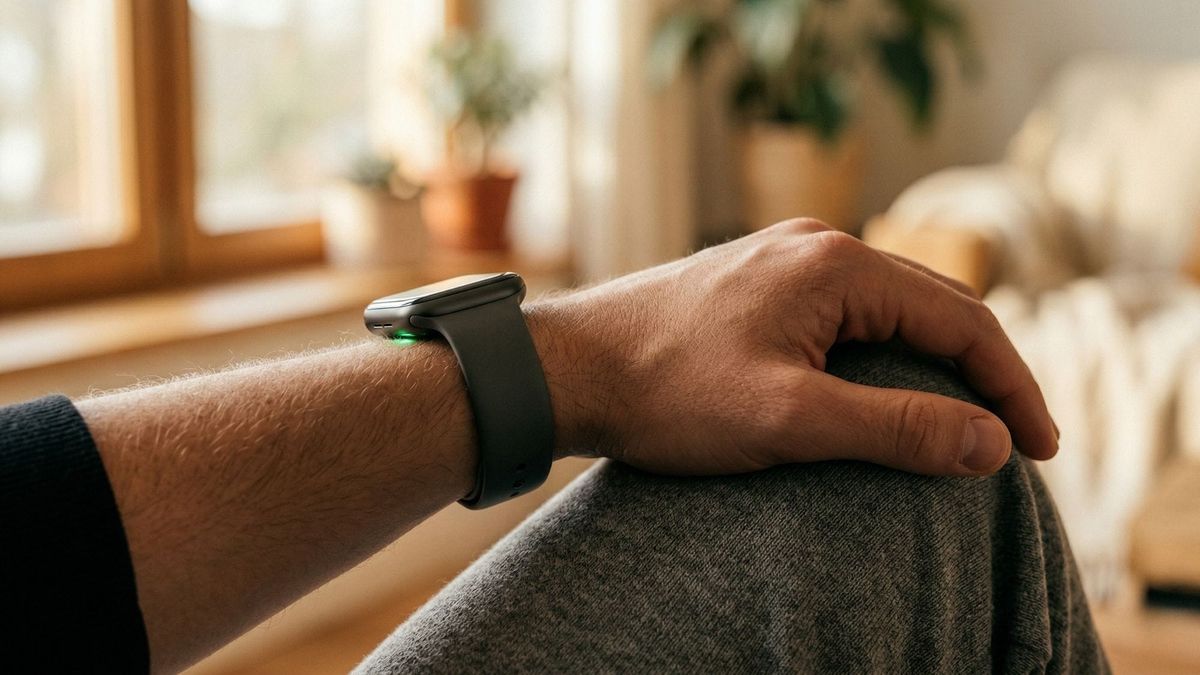
I remember staring at the blinking red battery icon on my wrist, feeling a sudden and entirely irrational sense of dread.
My watch was dying. The battery was far too low for me to be confident that it would actually measure my data during the intense training session I had planned.
I had a heavily compressed schedule that day. I was torn between plugging the watch in and waiting for it to charge—which wouldn't take long, but would make me late—or leaving the watch behind to start training immediately.
I felt an immediate surge of frustration. It felt like I had tuned into a negative frequency, as if the universe was offering a sign not to train that day. I was allowing a digital device and a low-battery icon to dictate what I was thinking and, more importantly, what I was feeling.
I realised in that moment that my wearable had become such an integrated part of my daily routine that without it, I felt exposed. What happens if I can’t record my heart rate? What happens if I can’t log this physical effort? Does the strain even count if there is no digital proof? I felt a rush of anxiety flood my body as I battled in my mind about what to do next. If I waited, I would be late for training, which meant a shorter session to avoid missing my next meeting.
These seconds and minutes were creating unnecessary, entirely manufactured stress. I had trained thousands of times in my life without biometrics. Yet, I had become so accustomed to wearing the tech, having it, wanting it, and needing it, that the mere thought of its absence was hurting me.
To be precise: I was hurting me.
My attachment to these negative thoughts and my reliance on external validation were causing an immediate physiological stress response. I quickly recognised that I was self-sabotaging my own day. I had a choice: train without the watch, or charge the watch and compromise the workout.
I sat down comfortably in a chair, closed my eyes, and began to focus entirely on my breathing. I breathed in deeply through my nose and exhaled slowly through my mouth, intentionally making the exhale much longer than the inhale.
After about three minutes, I opened my eyes, stood up, grabbed my training bag, and left. I didn’t think; I just did.
I had one of the best training sessions that day. I felt focused on the physical sensation of the work, reminding myself what was truly important. My breathing had helped me to regulate, to remain calm, and when I opened my eyes, I instinctively knew what the right decision was.
The watch stayed on the desk.
The Illusion of the Quantified Self

We live in an era of unprecedented biometric visibility. We can track our resting heart rate, our sleep architecture, our heart rate variability (HRV), and our daily strain with a device no larger than a wedding band.
The wellness industry has successfully sold us the concept of the "Quantified Self." We are told that if we just collect enough data about our bodies, we will inevitably become healthier, more resilient, and more focused.
But data is not an intervention.
Imagine driving a car at one hundred miles per hour towards a concrete wall. Your dashboard is beautifully illuminated. The speedometer accurately reflects your velocity; the sensors are flashing red to indicate an impending collision. The dashboard is doing its job perfectly.
But staring at the dashboard will not stop the car. You have to turn the steering wheel. You have to apply the brakes.
For high performers, athletes, and especially for those of us navigating the world with executive function differences like AuDHD, wearables offer a comforting illusion of control. We use them as external scaffolding to manage our internal chaos. But when the battery dies, or when the sleep score is unexpectedly low, that scaffolding collapses.
We have become experts at diagnosing our stress, but we have forgotten how to actually regulate it.
What is the Regulated Self?
The Regulated Self is the conscious ability to observe your physiological state and actively intervene using neuro-somatic tools. It is the transition from passively collecting biometric data to actively steering your nervous system out of a stress response and into a state of safety.
While the Quantified Self asks, “What is my stress score today?” the Regulated Self asks, “How do I manually shift my biology back to baseline?”
This shift represents the true frontier of peak performance. As I explored in The Era of Neuro-Somatic Intelligence: Why You Can’t Think Your Way Out of Stress, logic is a remarkably blunt tool when your body is experiencing a biological crisis. You cannot reason with a cortisol spike. You have to speak the language of the nervous system, and the nervous system only understands sensation, breath, and movement.
The Anxiety of Measurement (Data Vigilance)
When we obsess over our biometric outputs, we often fall into a trap known as "data vigilance." This is a state where the act of tracking your health becomes the primary source of your anxiety.
If you wake up feeling relatively refreshed, but your wearable gives you a sleep score of 42%, what happens? Your brain immediately searches for evidence to validate the technology. You suddenly feel lethargic. You anticipate a terrible day. You alter your training plans. You have allowed an algorithm to override your own biological sensing.
In neurobiology, the ability to feel and interpret the internal state of your body is called interoception. When we rely entirely on watches and rings to tell us how we feel, we suffer from interoceptive decay. We outsource our physical awareness to a microchip.
For the neurodivergent community, this is a profound risk. Navigating a standard corporate environment or a demanding schedule already requires an immense amount of "masking"—the exhausting process of camouflaging executive function differences to fit in. When we add the cognitive load of constantly monitoring a digital dashboard, we accelerate the path to burnout.
We begin to serve the data, rather than allowing the data to serve us.
The Intervention: From Dashboard to Steering Wheel
How do we transition from being passive observers of our data to active architects of our nervous system? We must learn to manually operate the machinery. We need to implement the principles of Modern Stoicism—controlling our internal response to external events—through biological action.

1. The Power of the Pause
Between the stimulus (the dead battery, the low sleep score, the stressful email) and the response, there is a space. In that space lies our freedom to choose. When I sat in that chair and closed my eyes, I was expanding that space. I was creating a biological circuit breaker. I was refusing to let the initial rush of adrenaline dictate my behaviour.
2. Neuro-Somatic Override
When you are spiralling into anxiety, your sympathetic nervous system (fight-or-flight) takes the wheel. Your heart rate elevates, and your breathing becomes shallow.
You cannot think your way out of this state, but you can breathe your way out of it.
By making my exhale longer than my inhale, I was sending a direct mechanical signal via the vagus nerve to my brain, stating: We are safe. There is no predator. You can decelerate. This is the foundation of The Architecture of Focus: A Neuro-Somatic Guide to Box Breathing. Breathwork is not a spiritual luxury; it is a hard-wired, mechanical override for the human operating system.
3. Reclaiming Internal Authority
When I left my watch on the desk and trained anyway, I was practicing a vital form of psychological independence. It was a Mindset Reset. I had to rely entirely on how my muscles felt, how my lungs felt, and the rhythm of my own effort.
The laboratory of the pull-up bar taught me that the body holds deep, intrinsic wisdom. By intentionally disconnecting from the dashboard, we force ourselves to listen to the engine again.
The Micro-Adversity of Disconnection
We are currently engineering all the friction out of our lives. We want to know exactly how many calories we burned, exactly how many steps we took, and exactly how long we spent in deep sleep. We crave certainty.
But resilience is not built in an environment of absolute certainty. Resilience is forged in the presence of micro-adversity.
Choosing to train without a watch, choosing to sit in silence without background noise, or choosing to breathe through a moment of panic rather than distracting yourself with a screen—these are all forms of voluntary micro-adversity. They are the reps that build a regulated mind.
Your wearable is a phenomenal piece of engineering. Use it to observe trends. Use it to understand how alcohol ruins your recovery, or how late-night screen time disrupts your architecture.
But when the pressure rises, when the battery dies, and when the noise of the world becomes deafening, remember that the device on your wrist is just a dashboard.
You are the driver. It is time to take the wheel.
Are you tired of just tracking your stress without knowing how to resolve it? Your nervous system is the ultimate competitive advantage, but it requires active management. If you are ready to move beyond the dashboard and learn the practical, neuro-somatic tools to find calm and sustain peak focus, explore my Guided Meditations on YouTube. These are not fluffy, abstract concepts—they are structured, biological interventions designed for the high-performing mind.
Frequently Asked Questions (FAQs)
What is the difference between tracking data and nervous system regulation?
Tracking data (like using a smartwatch) simply measures your physiological state, acting as a dashboard that highlights stress or fatigue. Nervous system regulation is the active intervention—using tools like breathwork or mindfulness—to manually shift your body out of a stress response and back into a state of safety.
Why does relying on wearable tech sometimes cause anxiety?
This is often referred to as "data vigilance." When we become hyper-focused on achieving perfect sleep scores or optimal HRV, any deviation can trigger a psychological stress response. We begin to trust the algorithm over our own internal physical sensations, leading to a disconnect from our actual wellbeing.
How can I practice nervous system regulation without any technology?
The most effective tool for immediate regulation requires zero technology: your breath. Techniques like the Double Five (5-5) breath, or simply ensuring your exhales are longer than your inhales, send immediate signals via the vagus nerve to calm your heart rate and lower cortisol, effectively acting as a biological circuit breaker.
The principles discussed are not a substitute for professional advice. Individual results from applying these concepts will vary, as your unique path, choices, and consistent efforts play the most significant role in your experiences. If you require guidance regarding specific personal, financial, medical, or mental health situations, please consult with a qualified professional. Please engage with these ideas responsibly, understanding that you are the architect of your choices and actions.