The Science of Sensory Withdrawal: How to Reset Your Dopamine Baseline
You aren't failing at sleep; you are failing to decelerate. Trying to jump from a highly stimulated state straight into rest is biologically impossible. Here is the mechanical override your nervous system requires.

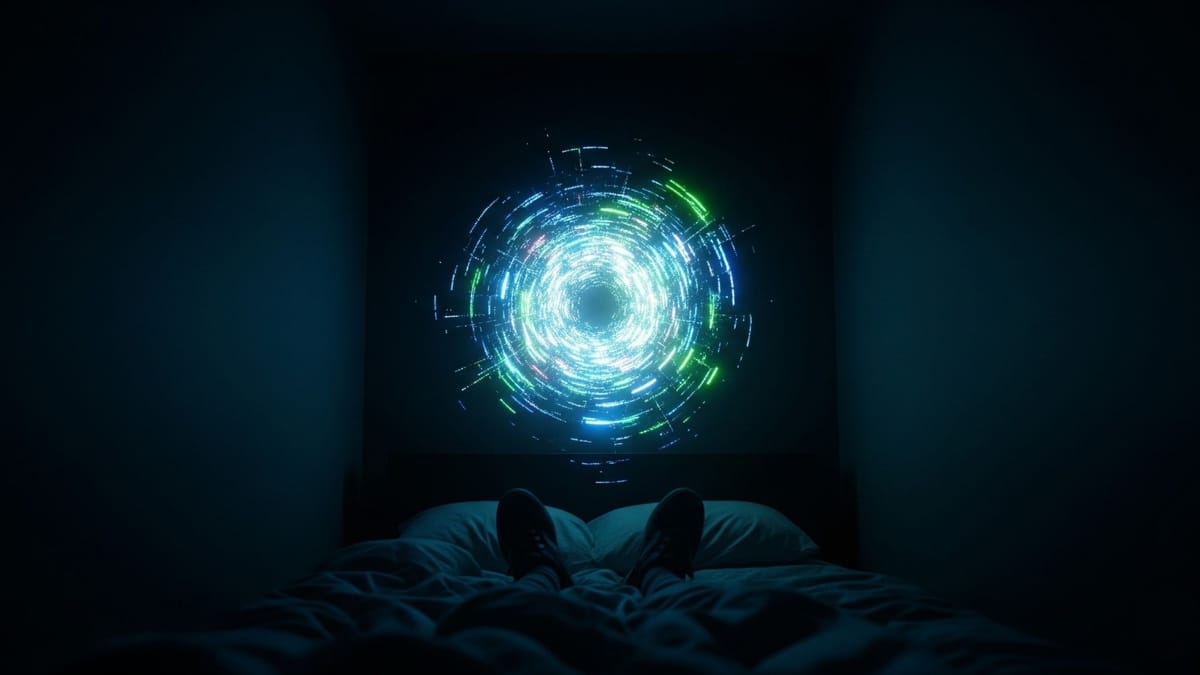
The Illusion of the Sleep Switch
There is a profound difference between being physically exhausted and being neurologically prepared for rest.
For high performers, entrepreneurs, and those of us navigating the world with an AuDHD operating system, the end of the day often presents a frustrating paradox. Your body is heavy. Your eyes burn. You are objectively fatigued. Yet, the moment your head hits the pillow, your mind accelerates.
You feel "tired but wired."
The standard advice in this scenario is incredibly patronising. We are told to drink chamomile tea, read a book, or simply "switch off." But this fundamental misunderstanding of human biology assumes that sleep is an analogue switch that can be flipped at will.
Sleep is not a switch; it is a physiological descent.
You are not failing at sleep. Your nervous system is simply stuck in a high-beta, overstimulated gear due to relentless daily context-switching. To understand why you cannot rest, we must first understand the neuro-mechanics of how your attention has been hijacked, and why your brain currently views relaxation as a biological threat.
What is the Dopamine Baseline?
The dopamine baseline is the resting level of dopamine constantly circulating in your brain. Constant micro-stimulations from screens, decisions, and artificial light artificially inflate this baseline, creating a state of chronic hyper-arousal that makes natural relaxation and deep sleep biologically impossible.
The Speeding Train of Overstimulation
Dopamine is frequently misunderstood purely as the "reward" chemical. In reality, it is the molecule of motivation, anticipation, and visual focus. It narrows your attention and propels you toward a target.
Throughout the day, every email notification, every micro-decision, every scroll on a screen, and every fluorescent light triggers a release of dopamine and its stress-hormone counterpart, noradrenaline. Over a 14-hour workday, these constant micro-doses do not just create spikes; they systematically raise your entire dopamine baseline.
Your brain adapts to this high-stimulus environment by keeping your receptors constantly firing. It assumes you are in a high-stakes environment where hyper-vigilance is required for survival.
Trying to jump straight from this high-beta, highly stimulated state into the profound vulnerability of sleep is like trying to stop a speeding train by simply turning off the engine. The momentum of your neurochemistry will carry you forward for miles.
As I explored in The Era of Neuro-Somatic Intelligence: Why You Can’t Think Your Way Out of Stress, logic is a blunt tool for a biological crisis. You cannot rationalise with an overstimulated nervous system. You must intervene mechanically.
The Algorithmic Theft of Isolation

We cannot discuss the dopamine baseline without confronting the primary mechanism of its inflation: the digital attention economy.
As my coaching practice and writing platform grew, I found myself managing multiple social media accounts. For someone with an AuDHD profile—where The Superpower Hidden in the Noise: How I Channel AuDHD for Ultra-Endurance and Focus relies on strict sensory regulation—this constant digital presence became a biological liability.
I wasn't just losing time; I was experiencing a systematic theft of my dopamine. My baseline was so elevated that analogue reality felt painfully slow.
So, I performed a ruthless audit of my inputs. I deleted the apps, stepped back from the platforms, and severed the digital umbilical cord of constant availability. Today, my brand ecosystem is highly intentional, existing strictly where I can provide deep value without compromising my neurochemistry—primarily between my writing, my coaching, and my YouTube channel.
Reclaiming the Quiet
The reality of my overstimulation became undeniable when I observed my most private habits. I realised I was scrolling on my phone while sitting on the toilet.
Think about how strange that is. The bathroom is one of the last places of true physical isolation we have left. It is a guaranteed break from external demands. Yet, instead of giving my nervous system three minutes of unstructured silence, my attention was still being auctioned off to an algorithm.
We have surrendered the void. We have engineered every moment of friction and boredom out of our day, replacing it with synthetic stimulation.
When you remove these inputs, you reclaim your mental ecosystem. You realise that narrowing your focus is not a limitation; it is the ultimate performance strategy. Technology is a required utility in my life, but I have engineered the architecture so that it works for my biology, not against it.
What is Sensory Withdrawal?
Sensory withdrawal is the intentional reduction of light, sound, and touch inputs to manually signal biological safety to the nervous system. By systematically starving the brain of external stimuli, you force an autonomic down-regulation, rapidly lowering your dopamine baseline to prepare for rest.
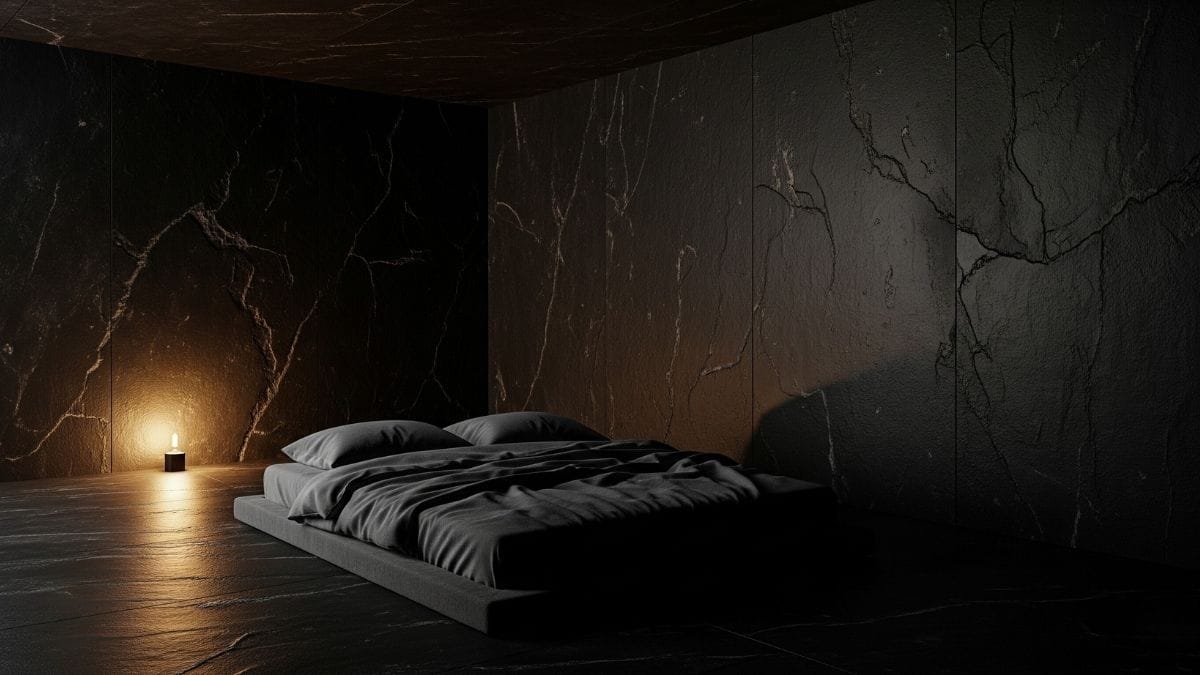
Manual Nervous System Regulation
When you are trapped in that "tired but wired" state, the worst thing you can do is lie in the dark and try to force your brain to be quiet.
When the mind lacks external data to process, a highly stimulated brain will simply turn inward and begin processing internal data—usually manifesting as anxiety, rumination, or aggressive overthinking.
You must bridge the gap between high stimulation and deep sleep. This is where Sensory Withdrawal (conceptually similar to the ancient Yogic practice of Pratyahara, but applied through a modern neuro-somatic lens) becomes essential.
By taking conscious control of the data entering your sensory gates, you initiate a parasympathetic response. You are manually lowering the biological drawbridge.
The Obsidian Sanctuary (The Protocol)
Understanding the mechanics of overstimulation is the first step, but intellectualising rest won't quiet a racing mind. You need a physiological intervention.
I have recorded a specific 60-minute guided protocol designed to walk your nervous system through progressive sensory withdrawal. Find a comfortable space, press play, and allow my voice to guide you into the 'Obsidian Sanctuary' to reset your dopamine baseline and prepare for deep, restorative sleep.
How to Maximise This Protocol
To ensure this auditory intervention effectively shifts your nervous system state, your physical environment must align with the objective. Before you begin the protocol, enforce these three non-negotiable parameters:
1. Thermal Regulation: The core body temperature must drop by approximately one degree to initiate sleep. Ensure your room is cool. If you are too warm, your sympathetic nervous system will remain active to manage thermal stress.
2. Optical Darkness: Melatonin production is highly sensitive to light, particularly blue and green wavelengths. Eliminate all ambient light in the room. Use blackout blinds or an eye mask. The eyes are an extension of the brain; starve them of input.
3. Supine Positioning: Lie flat on your back with your arms by your sides. This physical posture signals to the brain stem that defensive mobility is no longer required, facilitating a deeper drop into parasympathetic dominance.
The Busy Mind’s Guide to Deep Sleep: How Guided Meditation Rewires Your Brain for Rest provides further evidence on why this structural approach outperforms traditional relaxation techniques.
The Architecture of Rest
Rest is not a passive activity; it is a highly active biological process that requires architectural design.
In a world engineered to harvest your attention and elevate your dopamine, deep rest is an act of rebellion. You cannot wait for the world to quiet down. You must build the sanctuary yourself, close the gates, and manually lower the volume of your own biology.
By understanding the mechanics of your nervous system, you transition from a victim of overstimulation to the architect of your own recovery.
Frequently Asked Questions (FAQs): The Mechanics of Overstimulation
Why do I feel exhausted all day but wired at night?
This is a classic symptom of an elevated dopamine and cortisol baseline. Throughout the day, your fatigue is masked by stress hormones keeping you alert for tasks. When you finally stop, the physical fatigue is present, but your neurochemistry is still firing as if you are in a high-demand environment, preventing sleep onset.
How long does it take to reset your dopamine baseline?
While long-term structural changes (like dopamine fasting) can take up to 30 days to fully recalibrate receptors, an acute, temporary reset for the purpose of sleep can be achieved in 20 to 60 minutes using targeted sensory withdrawal protocols to force an autonomic shift.
Can I just use white noise to block out distractions?
While white noise can mask sudden environmental sounds, it still requires auditory processing. For a true nervous system down-regulation, protocols like the Obsidian Sanctuary guide your brain away from active processing, creating a state of deep cognitive distancing rather than just acoustic masking.
The principles discussed are not a substitute for professional advice. Individual results from applying these concepts will vary, as your unique path, choices, and consistent efforts play the most significant role in your experiences. If you require guidance regarding specific personal, financial, medical, or mental health situations, please consult with a qualified professional. Please engage with these ideas responsibly, understanding that you are the architect of your choices and actions.