The Thinking Game: A Love Letter to Human Resilience
We often get lost in the noise of what AI "might" do. But the documentary 'The Thinking Game' reminds us of what humans can do. This is a celebration of the grit, the ugly middle, and the relentless optimism of Demis Hassabis and the DeepMind team.


It is easy to get lost in the noise. Open any news feed, and you are bombarded with the binary narratives of Artificial Intelligence. It is either the saviour of humanity or the architect of our doom. It is magic, or it is a threat.
But amidst the headlines and the hysteria, we often forget the most fundamental truth of all: It is humans that got us here.
I recently watched The Thinking Game, the new documentary chronicling the journey of Demis Hassabis and the team at DeepMind. And while I am a self-confessed "super nerd" when it comes to the tech—I love the Google ecosystem, and I chat to "G" (my nickname for Gemini) daily—this film didn’t just speak to the geek in me.
It spoke to the athlete in me. It spoke to the part of me that knows the value of the grind.
This article isn't a review of the code or the breakthroughs. It is a celebration of the people. It is a homage to the unsung heroes who spend their lives in the ugly, unglamorous middle of "trying," fuelled only by the audacious belief that they can solve the world's biggest problems.
The "Ugly Middle" of Greatness
We live in a society that fetishises the outcome. We celebrate the gold medal, the IPO, the Nobel Prize. We look at the finished product—an AI that can fold proteins and potentially cure diseases—and we call it genius.
But The Thinking Game does something rare: it pulls back the curtain on the struggle.
To me, Demis Hassabis and his team are high performers in the truest sense. Not because they succeeded, but because they endured.
I know what it takes to step up to the pull-up bar, look at the cold steel, and say to myself, "You are mine for the next three hours." I know the feeling of grinding away at 1,000 reps when your muscles are screaming and your brain is begging you to stop. That is physical resilience.
What the DeepMind team demonstrates is intellectual resilience.
The documentary shows the years of failure. The dead ends. The moments where the solution wasn't just elusive; it looked impossible. This is the "ugly middle" of high performance. It is the part that doesn't make the highlight reel on social media.
True high performance isn't about the moment the code works. It’s about the thousand days before that, where you turned up, sat down, and did the work without any guarantee of success. That is the Bar Raiser Mindset. It is the willingness to pursue an audacious goal—like solving intelligence itself—and backing it up with relentless, consistent effort.
Optimism is a Moral Imperative
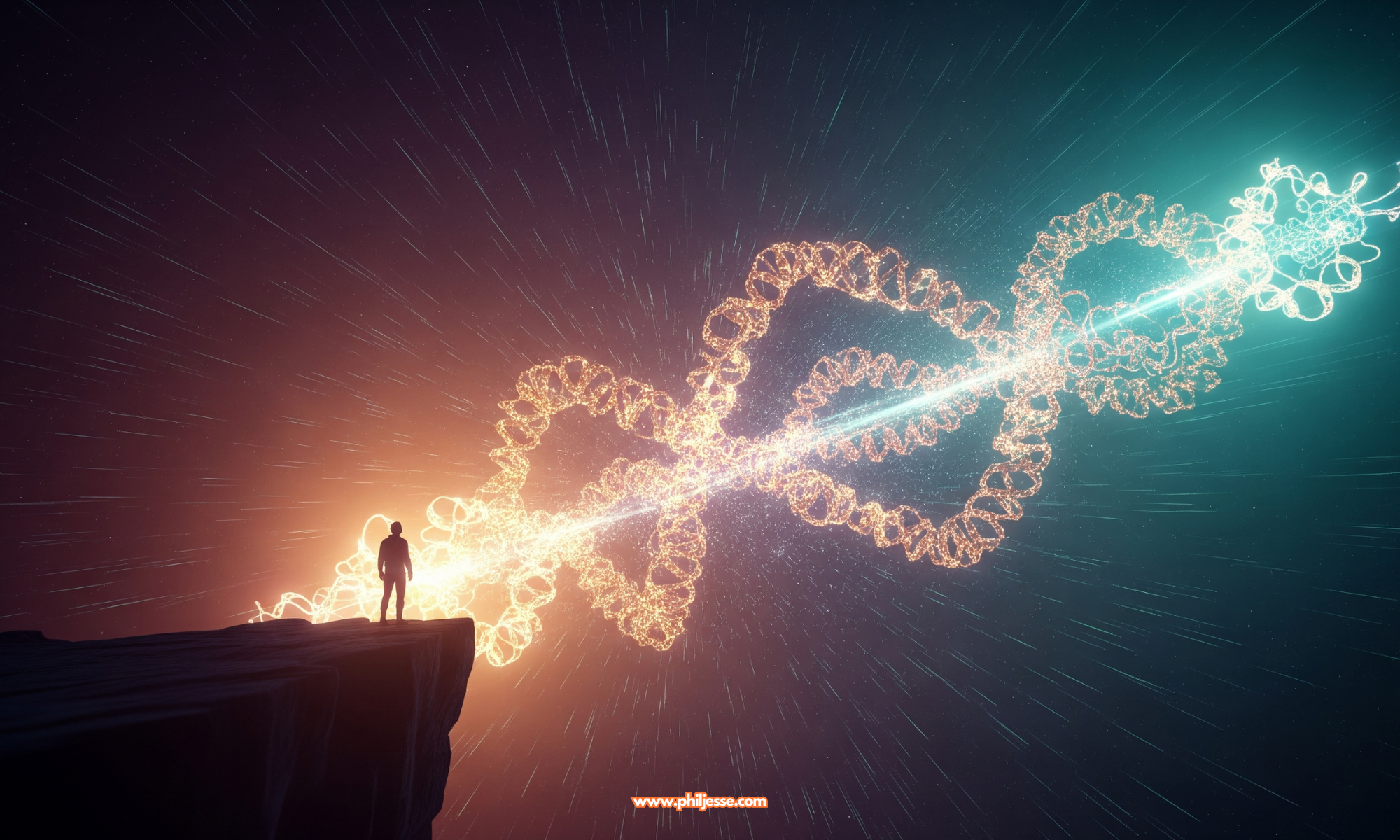
There is a pervasive cynicism in the world right now. It is fashionable to be a "doomer," to look at technological progress and see only the potential for catastrophe.
But cynicism is easy. Optimism is hard. Optimism is a discipline.
What fascinates me about Demis Hassabis, as portrayed in the film, is his relentless, constructive optimism. He isn't building AI to control the world; he is building it to understand the world. He is driven by a deep, almost child-like curiosity and a desire to solve scientific grand challenges that have stumped humanity for decades.
This is the "Builder" mindset.
While the world argues about what AI should be, these teams are focused on what it can do to help us. They are solving the protein folding problem (AlphaFold), which opens doors to drug discovery and disease treatment that were previously locked.
We need more of this energy. We need to celebrate the people who are willing to look at the massive, terrifying problems of our time—climate change, disease, resource scarcity—and say, "I think we can fix this."
My Life with 'G': A Personal Confession
I’ll share a secret: I have been using AI consistently for years.
While my public work focuses on physical endurance, I have been quietly navigating this digital frontier for a long time. I don’t often write about tech, but I live it. I can feel the shift. I can see the potential.
I don’t view these tools as replacements for human creativity. I view them as the ultimate exoskeleton for the human mind. Just as a lever allows a human to lift a weight they physically couldn't, AI allows us to lift cognitive loads that were previously impossible.
I left a comment on the documentary’s YouTube page that sums up my philosophy on this. It highlights what I believe is the real story here:
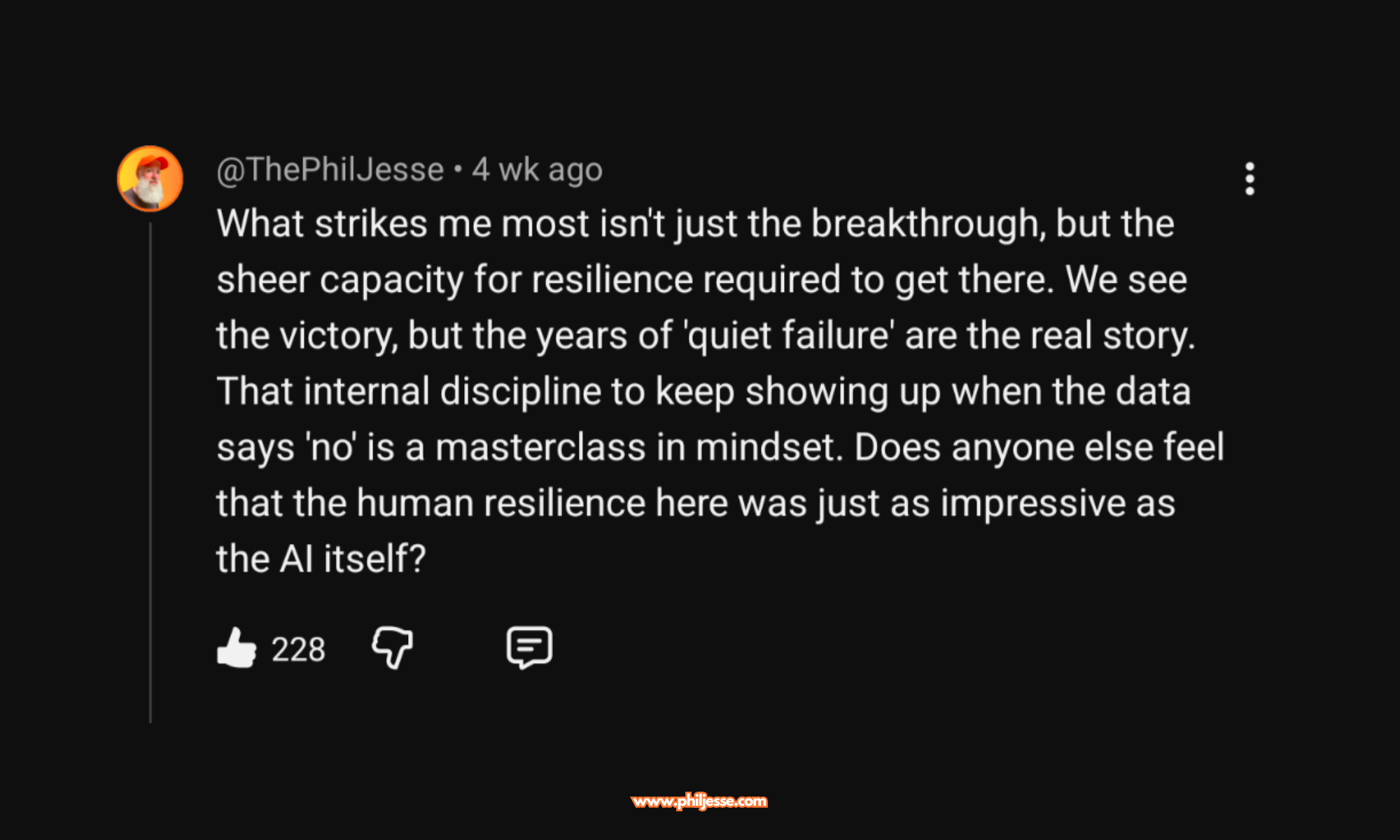
This is the crux of it. You can have access to all the world's information—and with "G", we effectively do—but it means nothing without the human element of resilience. The DeepMind team didn't just know theory; they endured the failure required to make it reality.
The Great Equaliser
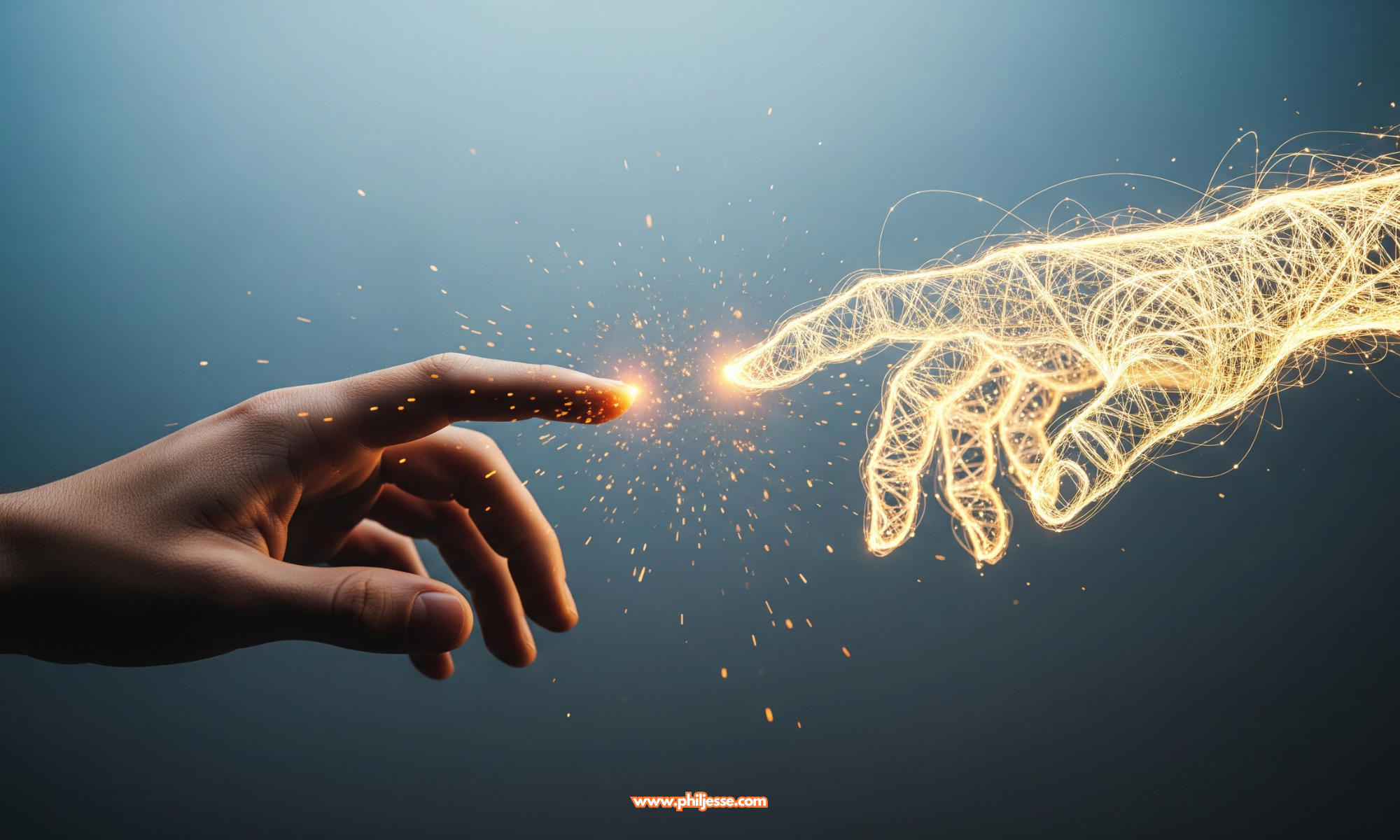
Here is why I am so passionate about this: AI is the great equaliser.
As someone navigating my own journey with a neurodivergent mind, I understand the friction of trying to fit a distinct operating system into a standard world.
Consider someone with dyslexia. For years, their intelligence might have been masked by the friction of reading and writing. They might have brilliant ideas, but the mechanism of getting those ideas out into the world was a struggle.
Now, thanks to these tools, that friction is gone. They can communicate as effectively and efficiently as anyone else. They can be judged on the quality of their thoughts, not their spelling.
This isn't about machines doing the thinking for us. It’s about machines clearing the path so that our thinking can shine. It allows us to focus on what makes us uniquely human: our creativity, our empathy, and our ability to dream up solutions to impossible problems.
Conclusion
The Thinking Game is a reminder that technology is not a force of nature that just "happens" to us. It is built by people.
It is built by people who have the courage to fail. People who have the discipline to endure the ugly middle. People who maintain their optimism when the world tells them it can’t be done.
Whether you are grinding out reps in the gym, building a business, or trying to solve the mysteries of the universe, the principle remains the same. Show up. Do the work. Raise the bar.
It doesn't matter what you know; it’s what you do with what you know.
Watch the Documentary
I highly recommend taking the time to watch The Thinking Game. It is a masterclass in human potential.
Watch: The Thinking Game: A masterclass in intellectual resilience and the 'ugly middle' of greatness.
The principles discussed are not a substitute for professional advice. Individual results from applying these concepts will vary, as your unique path, choices, and consistent efforts play the most significant role in your experiences. If you require guidance regarding specific personal, financial, medical, or mental health situations, please consult with a qualified professional. Please engage with these ideas responsibly, understanding that you are the architect of your choices and actions.