Beyond the Edge: What Alex Honnold’s Taipei 101 Climb Teaches Us About the Zero-Error Mindset
1,667 feet of vertical steel. No ropes. No room for error. Most see bravery; I see a masterclass in neuro-regulation. Here is what Alex Honnold’s climb teaches us about mastering fear in 2026.

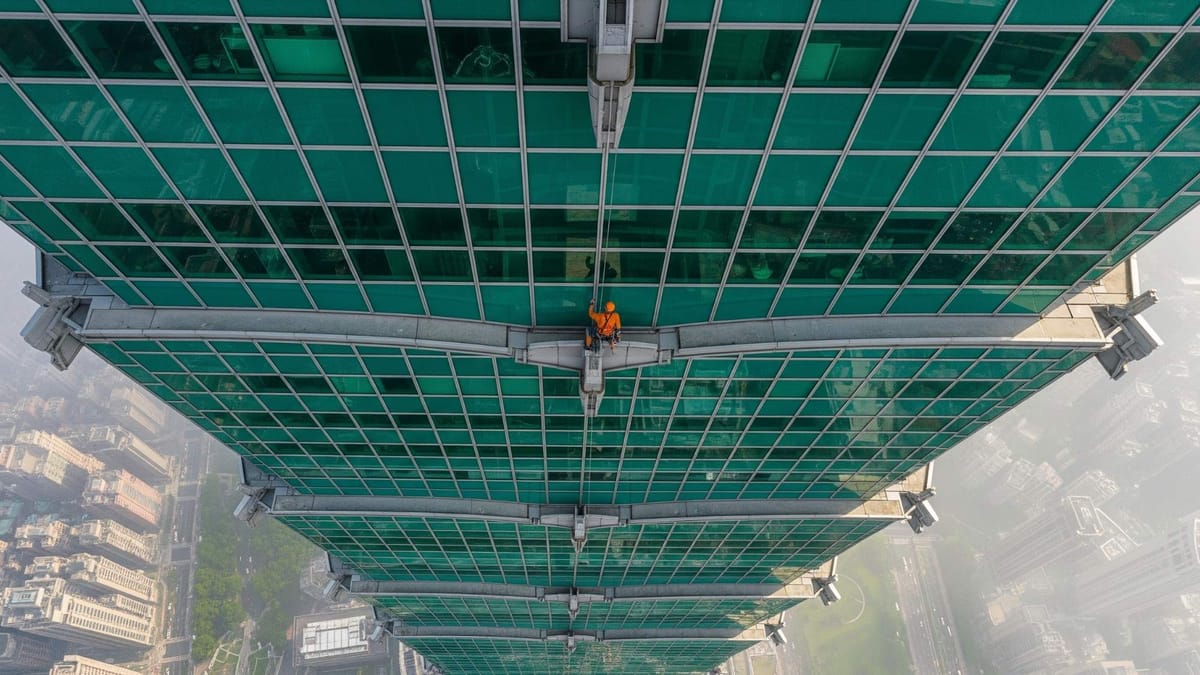
There is a specific altitude where the human mind typically begins to bargain with gravity. For most, it is the height of a ladder. For Alex Honnold, hanging from the side of the Taipei 101 skyscraper, that altitude was 1,667 feet.
We have just entered 2026, a year full of blank pages and potential, but few of us will face a challenge quite as binary as Honnold’s recent ascent. Live on Netflix, the world watched him navigate the "Bamboo Boxes"—eight stacked sections, each leaning at a 7-degree overhang—without a rope.
To the casual observer, this is a spectacle of adrenaline. But if we look closer, through the lens of the Bar Raiser Mindset, we don't just see a climber. We see a masterclass in neuro-regulation, radical preparation, and the "Zero-Error" standard.
In the gym or the boardroom, failure is data. We miss a rep, we lose a deal, we learn, and we go again. But at 900 feet, hanging from a steel fin, the room for error is near zero. Failure isn't a lesson; it is final.
So, how does a human perform flawlessly when the stakes are absolute?
The Architecture of the Impossible
The Taipei 101 is not a mountain. It is an alien landscape of glass and steel, designed to shed typhoons, not to be gripped by human fingers.
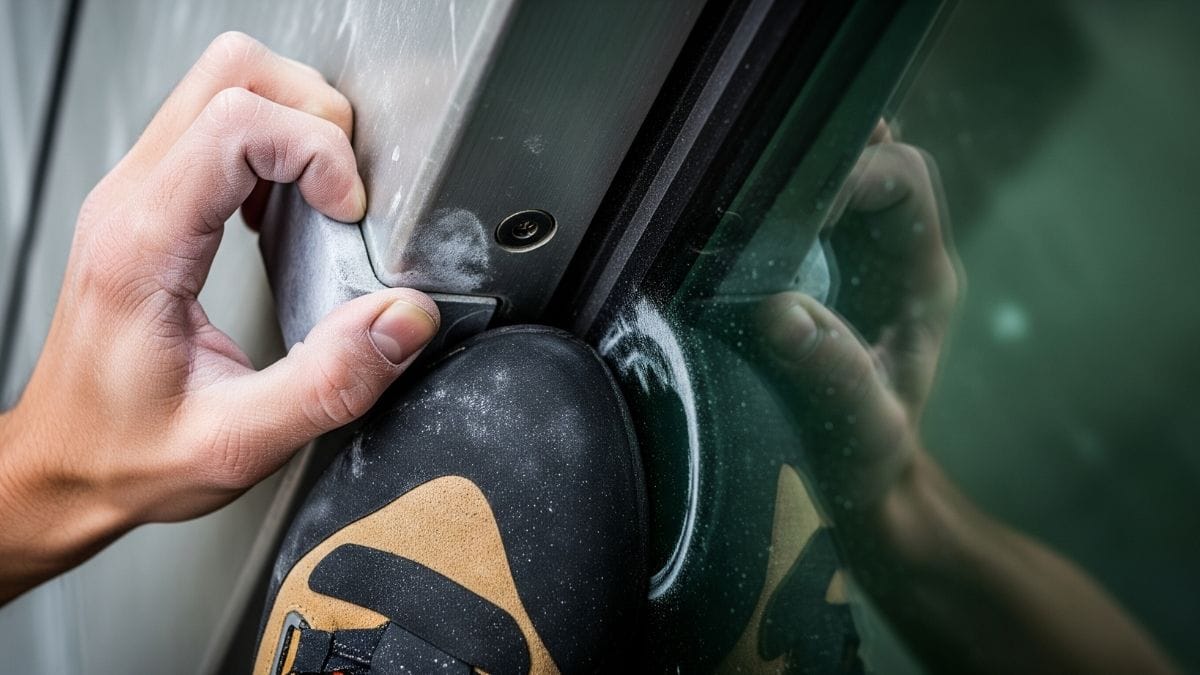
A traditional rock climb offers friction and distinct holds. Steel offers exposure. During the climb, Honnold had to rely on "smearing"—a technique where you press your rubber soles against the smooth surface, trusting that the friction coefficient will hold your body weight. It is a trust exercise with physics, performed over a drop that would give you time to think about the fall.
The route was broken by "Dragons"—massive ornamental statues that disrupted the flow of the climb—and the notorious "Ruyi" objects. At one point, Honnold noted that he had planned to go left around a Dragon, but improvised and went right because it looked "cleaner for pigeon poop."
That micro-decision highlights the difference between a stunt and mastery. A stunt is rigid; mastery is fluid. Even with death one slip away, he remained open to new data, adapting his plan in real-time.
This level of performance doesn't come from ignoring fear. It comes from a complete restructuring of how the brain processes it.
Visualisation: The Rehearsal Before the Reality

What is visualisation? Visualisation is a form of neuro-rehearsal where the brain simulates a specific physical action or emotional state to strengthen neural pathways. It is not daydreaming; it is a deliberate practice that primes the nervous system to perform tasks on autopilot, reducing cognitive load during the actual event.
For Honnold, visualisation is the only safety equipment he has.
When I prepare for a heavy endurance session, I use visualisation to create a sanctuary in my mind. I rehearse the fatigue before it arrives. Honnold takes this to the extreme. He doesn't just visualise success; he visualises the terror.
He imagines the sensation of his foot slipping. He rehearses the panic of losing his grip. He sits with that fear in the safety of his mind until his amygdala—the brain's fear centre—stops reacting to it. By the time he is actually 1,000 feet up, he has already "lived" the climb hundreds of times. The fear is boring because he has already processed it.
The Solitude of the Long-Distance Athlete
There is a profound silence that comes with solo training. Watching Honnold, listening to his heavy metal playlist while the world below him held its breath, I was reminded of my own time in the "Laboratory of the Mind."
I train solo. I don't require a training partner, and I don't look for external validation. Over the course of my 100,000 pull-up odyssey, I developed a deep respect for the solitude of the bar.
There is a reverence for the first pull-up, just as there is for the 100,000th. In the beginning, I was focused on the macro goal—chasing the number. But that mindset shifted. I realised that I wasn't training to satisfy a spreadsheet; I was connecting with myself.
I have experienced moments of euphoria during high-volume sets that are difficult to articulate—a feeling like someone has plugged an energy cable directly into the top of my spine. It becomes effortless. The threshold keeps rising, but the mind stays still.
However, there is one critical difference between my laboratory and Honnold’s tower.
I have mastered the art of endurance through a feedback loop of failure. If I strain a tendon or my grip fails, I drop to the floor. I rest. I recover.
If Alex Honnold strains a tendon on the 80th floor, there is no floor to drop to. There is only the option to keep moving upward. This places a level of mindset complexity on his pursuit that is almost unfathomable. He cannot just "listen to his body" and stop; he must listen to his body and negotiate with it to survive.
Climbing Your Own Skyscraper in 2026
We are not all free soloists. Most of us will never hang by our fingertips from a skyscraper. But the principles of the "Zero-Error" mindset apply to every high-performer, athlete, or seeker looking to evolve this year.
1. Radical Preparation
Honnold knew every Dragon, every Ruyi, and every transition point before he left the ground. If you are launching a business, a fitness challenge, or a new life chapter, do not rely on hope. Rely on preparation. Do the work before the work.
2. Solo Accountability
Train alone. It forces you to look at who you truly are when no one is watching. There is no one to spot you, and no one to blame if you fail. This is where resilience is forged.
3. The Feedback Loop
The day I stop listening to my body is the day mistakes are made. Honnold’s survival depended on him knowing exactly how much grip strength he had left, down to the percentage. Cultivate that relationship with your own physiology.
The View from the Spire
When Alex hauled himself over the final ledge of Taipei 101, he didn’t look like a man who had conquered a building. He looked like a man who had conquered himself.
The room for error was zero, but his capacity for focus was infinite.
As we move into the rest of this year, remember that the "Dragons" you face—whether they are mental blocks, physical limits, or professional hurdles—are just obstacles to be navigated.
The year is ahead of you. The wall is waiting. Visualise the route, chalk up, and begin.
Visual Case Study: The Climb
To truly understand the "Zero-Error" mindset, you have to see it in motion. Words can describe the altitude, but they cannot replicate the vertigo. This highlight reel from Netflix Sports captures the raw reality of the "Bamboo Boxes" and the technical precision required to navigate the "Dragons."
Watch closely how Honnold maintains his rhythm—calm, calculated, and efficient. Notice the lack of hesitation as he smears his feet on the steel. This is not just athleticism; it is a state of total neurological regulation.
Frequently Asked Questions (FAQs)
How does Alex Honnold train for free solo climbs?
Alex Honnold combines extreme physical conditioning with "neuro-rehearsal." He memorises every hand and foot placement of a route and visualises the climb repeatedly, including potential errors, to desensitise his brain to fear.
What were the "Bamboo Boxes" on the Taipei 101 climb?
The "Bamboo Boxes" are a series of eight stacked sections on the upper floors of Taipei 101. Each section leans outward at a 7-degree angle, creating a physically demanding overhang that required Honnold to hang by his fingertips while suspended over 1,000 feet in the air.
Why is visualisation important for fitness and performance?
Visualisation primes the nervous system for action. By mentally rehearsing a lift, a run, or a climb, you strengthen the neural pathways associated with that movement, improving coordination, confidence, and the ability to perform under pressure.
The principles discussed are not a substitute for professional advice. Individual results from applying these concepts will vary, as your unique path, choices, and consistent efforts play the most significant role in your experiences. If you require guidance regarding specific personal, financial, medical, or mental health situations, please consult with a qualified professional. Please engage with these ideas responsibly, understanding that you are the architect of your choices and actions.