
Pull-Up Endurance & Biomechanics | The Laboratory of the Mind
Most training routines chase rapid fatigue instead of structural longevity. Having logged over half a million strict repetitions, here is how you build elite calisthenic volume without destroying your tendons.
The Laboratory of the Mind: Built on 500,000 Strict Repetitions
Why volume is not about brute force, but structural efficiency, neuro-somatic pacing, and tendon longevity.
Most people treat the pull-up bar like a quick fitness test. You jump up, crank out as many reps as possible until your forearms burn and your form falls apart, and drop to the floor.
When you train that way, you are simply chasing acute muscular fatigue. You are not building genuine endurance, and you certainly are not developing movement patterns that protect your joints over a lifetime.
Over the last decade, I have logged more than 500,000 strict-form pull-ups. That includes completing 100,000 repetitions in 151 days, and repeatedly banking 500-rep sessions in under 90 minutes.
You do not reach those milestones through brute force or aggressive grinding. You reach them through biomechanical efficiency, deliberate autonomic pacing, and obsessive respect for your connective tissue.
To me, the pull-up bar has never been a piece of gym hardware. It is the Laboratory of the Mind.
When you hang from a steel bar and cumulative volume builds, the mental chatter strips away. You cannot negotiate with gravity, and you cannot fake a clean dead-hang. Every micro-movement—from how your thumb contacts the bar to the tension across your scapulae—either preserves your kinetic energy or collects an immediate tax on your elbows and shoulders.
This space is not about generic bodybuilding, rapid weight loss, or mainstream personal training. It is an open technical resource for athletes and practitioners who want to master high-volume calisthenic endurance, eliminate energy leaks, and keep their joints resilient for the long haul.
Skip the trial and error. Work directly with Phil live from your bar via Google Meet to audit your technique, eliminate energy leaks, and protect your elbows.
👉 Explore Live Movement Audits & Programming Clinics (£62.50 / £125.00) ↓
The Laboratory in Motion: Strict Biomechanics Under Load
Movement theory on a screen is one thing. Watching strict mechanics in motion is another. Here is what controlled cadence, full range of motion, and passive thumb stabilisation look like in real time:
(Watch 60-second slow-motion pull-up biomechanics & tempo demonstration)
"It Doesn’t Matter What You Know. It’s What You Do With What You Know."
Information is cheap. Movement execution under fatigue is where biological reality lives.
Every day, people consume hours of tutorials on calisthenics techniques, study anatomical diagrams of the latissimus dorsi, and bookmark elbow mobility drills.
Yet the moment they jump on a bar, all that intellectual theory evaporates. They kick their legs for momentum, flare their elbows out wide, hyperextend their lower back, and crank their chin toward the ceiling just to register a repetition.
In low-volume training—such as testing a single three-rep max—you can often get away with sloppy mechanics. Your muscles compensate, your connective tissue absorbs the immediate shock, and you walk away unscathed.
Endurance changes the arithmetic completely.
Across 100, 500, or 10,000 repetitions, every biomechanical error collects compound interest in the form of physical wear:
- The Elbow Flare: It is never just an awkward aesthetic angle. It shifts acute shear stress directly onto the common flexor tendon, paving the way for chronic medial epicondylitis (golfer's elbow).
- The Uncontrolled Drop: Letting yourself free-fall from the top of the movement shocks the bicep tendon and shoulder capsules at the bottom dead-hang, tearing up soft tissue over time.
- The Asymmetric Grip: Small hand discrepancies twist the spine and create unequal loading across the shoulder girdle, leaking energy with every pull.
The First Point of Contact: Why Grip and Skin Fail Before the Lats
Most athletes assume their back muscles or cardiovascular engine will be the first to surrender during a high-volume session. In reality, your skin and forearms almost always fail first.
If you tear a callus on repetition forty, your workout is finished immediately, and your training is sidelined for a fortnight. Across half a million repetitions, hand placement is not an afterthought—it is your primary structural anchor:
- Deliberate Placement Over Jumping: Never jump up and blindly snatch the bar. Jumping causes immediate skin drag and rolls the flesh of your palms, priming you for instant tears. Step up deliberately and place your hands one at a time, establishing clean, uncompromised surface contact.
- The Pronated Thumbs-Over Advantage: Wrapping your thumbs tightly beneath the bar forces excessive forearm squeeze and channels acute tension directly into your medial elbow tendons. Resting your thumbs lightly over the bar transforms them into passive stabilisers. This allows you to hang from the skeletal structure of your fingers and recruit your latissimus dorsi without unnecessary forearm burn.
- Calluses Are Equipment, Not Badges of Honour: Thick, unmanaged calluses are structural liabilities waiting to shear under rotational friction. Keeping them smooth, dry, and level is just as vital as training your back.
True mastery is not about knowing dozens of complicated training variations. It is about executing one foundational movement pattern with uncompromising precision, hundreds of times in a row, when your forearms are on fire and your brain is looking for a shortcut.
We do not train simply to survive a single workout. We train to build repeatable, efficient movement patterns that keep your joints quiet, your tendons strong, and your body capable for decades to come.
The Architecture of Volume: Beyond Muscular Failure
How to accumulate hundreds of strict repetitions without triggering neurological exhaustion or structural breakdown.
Most fitness advice tells you to train until your muscles fail. That philosophy works reasonably well if your sole objective is chasing an acute muscular pump in a commercial gym.
If your objective is high-volume endurance, training to failure is a mathematical dead end.
When you red-line your central nervous system on set one by fighting through a messy twentieth repetition, your motor unit recruitment falls off a cliff. Your form disintegrates, your recovery windows blow out, and your remaining sets yield diminishing returns. You end up trading volume for exhaustion.
Building genuine endurance requires shifting from muscular grinding to structural pacing. You treat repetitions not as isolated bursts of exertion, but as bricks laid systematically inside an engineered architecture.
The "Reps, Sets, Blocks & Milestones" Protocol
Facing a target of 500 or 1,000 pull-ups in a single workout can feel paralysing if you look at the mountain all at once. The human mind naturally resists massive numbers under physical friction.
To make extreme volume manageable and repeatable, we deconstruct the session into four distinct operating layers:
- Reps: The fundamental atom. A single, strict repetition executed with complete control from dead-hang to chin clear of the bar.
- Sets: A small, predetermined cluster of reps. Rather than testing your maximum unbroken capacity, your working set should sit well below your ceiling.
- Blocks: A collection of sets grouped together to form a substantial chapter of work—typically 50 or 100 total repetitions.
- Milestones: Major mental and physical markers across the session (e.g. crossing 250 or 500 reps) that signal a formal shift in pacing or recovery.
Why We Cap Working Sets at 5 Repetitions
The cornerstone of this protocol is simple: we intentionally limit high-volume working sets to a maximum of 5 repetitions.
When athletes first hear this, their immediate instinct is to object: "Phil, I can do 20 pull-ups in a row. Why would I stop at five?"
Because quality control under fatigue determines tendon survival.
If you aim for 100 total pull-ups and attempt them in sets of 15 to 20, your final repetitions on every set will feature kipping, cervical spine extension, and jarring drops. By repetition sixty, you are no longer training clean movement; you are rehearsing compensation patterns under load.
If you instead complete those 100 pull-ups as twenty clean sets of 5 reps (20 x 5), your central nervous system remains calm. Your mechanics never degrade, and your hundredth pull-up looks identical to your first. You bank the exact same cumulative volume while sparing your connective tissue the metabolic trauma that creates chronic inflammation.
Cadence, The "Bite Point", and The Double Five Breath
True endurance is not just about the numbers written on your tracking sheet; it is governed by the physiological rhythm between and during each rep.
- The 1.25-Second Cadence: Rushing the movement burns glycogen unnecessarily, while moving too slowly creates excessive time under tension. Aim for approximately 1.25 seconds on the concentric drive upwards, and a controlled 1.25 seconds on the eccentric descent. You are working with gravity, not panicking against it.
- Respecting the "Bite Point": At the bottom of every rep, you must hit full extension—the "bite point"—where the arms are straight and the lats are fully lengthened. Cutting this short creates an incomplete rep and cheats your back out of its full contractile range. However, reaching the bite point does not mean collapsing passively into your shoulder joints. It means holding active scapular control at full dead-hang length before initiating the next pull.
- The Double Five (5-5) Breath: Rest periods are not passive pauses; they are active recovery windows. Between sets, apply a steady circular breathing rhythm: inhale smoothly through your nose for 5 seconds, and exhale fully through your mouth for 5 seconds. This simple neuro-somatic pattern down-regulates sympathetic adrenaline spikes, steadies your heart rate, and ensures you step back up to the bar physiologically recovered.
The Progression Engines: The Triangle and Square Methods
Once you understand how to structure your volume, you need a systematic method to scale your capacity across weeks and months without guessing.
1. The Triangle Method (Bodyweight Capacity)
For pure bodyweight mastery, progression is governed by three interconnected levers:
- Total Volume: The aggregate count of strict reps completed in a session (e.g. 100, 250, or 500 reps).
- Reps Per Set: The size of your working clusters (keeping the 5-rep ceiling intact for high-volume days, or adjusting to sets of 2–4 as fatigue accumulates).
- Rest Intervals: The precise duration between sets (e.g. 30 seconds between sets, with 60 to 90 seconds between completed 100-rep blocks).
By manipulating just one side of this triangle at a time—such as reducing your rest intervals from 45 seconds to 30 seconds while keeping total volume fixed—you force cardiovascular and metabolic adaptation without increasing joint load.
2. The Square Method (Adding External Load Safely)
When an athlete builds a solid baseline of bodyweight endurance, external load can be introduced. This transforms the Triangle into the Square Method by introducing a fourth variable: Added Weight.
Adding external load via a dip belt or weighted vest dramatically accelerates raw pulling strength and lat recruitment. However, the rule of structural longevity remains absolute:
Never change more than one variable at once.
If you increase your total volume target, add 10kg of external weight, and reduce your rest intervals in the same workout, you cannot measure what caused your progress—or what inflamed your elbows. Isolate your variables. Measure with precision, manage with patience, and let the adaptation compound quietly.
📖 Explore the Complete Technical Manual:
For the comprehensive, step-by-step masterclass covering advanced chalk application, detailed callus maintenance protocols, and complete periodisation schedules, read the full guide:
📈 Mastering Pull-Up Endurance: The 'Reps, Sets, Blocks' System →
Tendon Longevity: Navigating Friction and Bouncing Back

When chronic inflammation strips away your physical outlet, the mental toll is immediate. Here is the raw truth about golfer's elbow, tendon adaptation, and why calisthenics was the cure, not the cause.
Tendonitis does not announce itself with a dramatic snap. It creeps in quietly.
It starts as a faint, dull ache on the inside of the elbow after a heavy session. You ignore it, wrap a compression sleeve around your forearm, and carry on pulling. Within three weeks, that faint ache becomes a burning fire. Picking up a kettle, opening a door, or simply holding a coffee cup sends sharp, biting pain through your medial epicondyle.
When you can no longer hang from a bar, the physical injury quickly becomes a mental crisis.
For anyone who relies on movement for focus, emotional grounding, or nervous system regulation, being forced into stillness feels like having your primary coping mechanism confiscated. You watch your hard-earned conditioning stall, your mind spirals into frustration, and every failed attempt to test the elbow chips away at your confidence.
The standard advice you receive from most clinics is predictable: "Stop doing pull-ups, rest for three months, and take anti-inflammatories."
I followed that advice early on. It was a complete dead end.
Tendons have poor vascularity. They do not regenerate simply because you sit on the sofa waiting for the pain to vanish. Complete rest causes collagen disorganisation and tendon atrophy; the moment you return to the bar, the pain flares right back up because the tissue was never stimulated to remodel.
The Calisthenics Paradox: The Cause and The Remedy
Pull-ups did not give me golfer's elbow. Ignorant movement mechanics and unmanaged volume gave me golfer's elbow.
When I stripped away the ego and examined my movement under a microscope, the root causes were glaringly obvious: rushing my eccentric descent, flaring my elbows outward, squeezing the bar with a white-knuckle death grip, and neglecting the antagonist muscles that support the wrist flexors.
Once I corrected the biomechanical errors, calisthenics stopped being the source of pain and became the primary tool for my rehabilitation:
- Decompressive Active Hangs: Instead of avoiding the bar, I used structured, gentle active hangs. Hanging promotes gentle traction across the shoulder girdle and stimulates blood flow through the forearm fascial lines without placing dynamic shear stress on the elbow.
- Switching to Pronated Thumbs-Over: Wrapping the thumb underneath forces intense recruitment of the flexor carpi radialis. Resting the thumbs over the bar immediately removed excessive tension from the medial tendon, allowing my lats to take the load while the elbow healed quietly.
- Antagonist Muscle Balance: High-volume pulling overdevelops the finger and wrist flexors. To restore structural symmetry, you must train the extensors. Simple daily work with extensor bands and eccentric wrist extensions gave my joints the counter-balance they were looking for.
- Respecting Collagen Turnover: Muscles adapt in weeks because they are rich in blood supply. Tendons take months. If you advance your training volume faster than your connective tissue can remodel, you are running on borrowed biological time.
The 4-Hour Tendonitis Recovery Documentary
I did not want to write a polished, abstract summary of recovery after the fact. I wanted to capture the reality while I was deep inside the friction.
During my recovery, I documented the entire rehabilitation process on YouTube—a raw, 4-hour, vlog-style documentary tracking my daily workout logs, soft-tissue routines, and the psychological battle of rebuilding my capacity from scratch.
You see the data on screen. You see the days where progress stalled. And you hear the candid, unvarnished mental health side of living with chronic physical limitation.
🎥 Watch the Full Recovery Journey:
Explore the raw 4-hour documentary, daily rehab logs, and the mental frameworks used to conquer medial epicondylitis:
Watch "My Tendonitis Recovery & Workout Log" on YouTube ↓
Live Movement Audits & Technical Clinics
Real-time biomechanical feedback and volume programming conducted directly at your pull-up bar.
Theory on a screen is valuable, but reading about movement will only take you so far. When you are hanging from a steel bar, small blind spots in your grip, elbow tracking, or scapular engagement compound with every repetition.
I do not ask you to film yourself, upload video files, or wait days for an email critique.
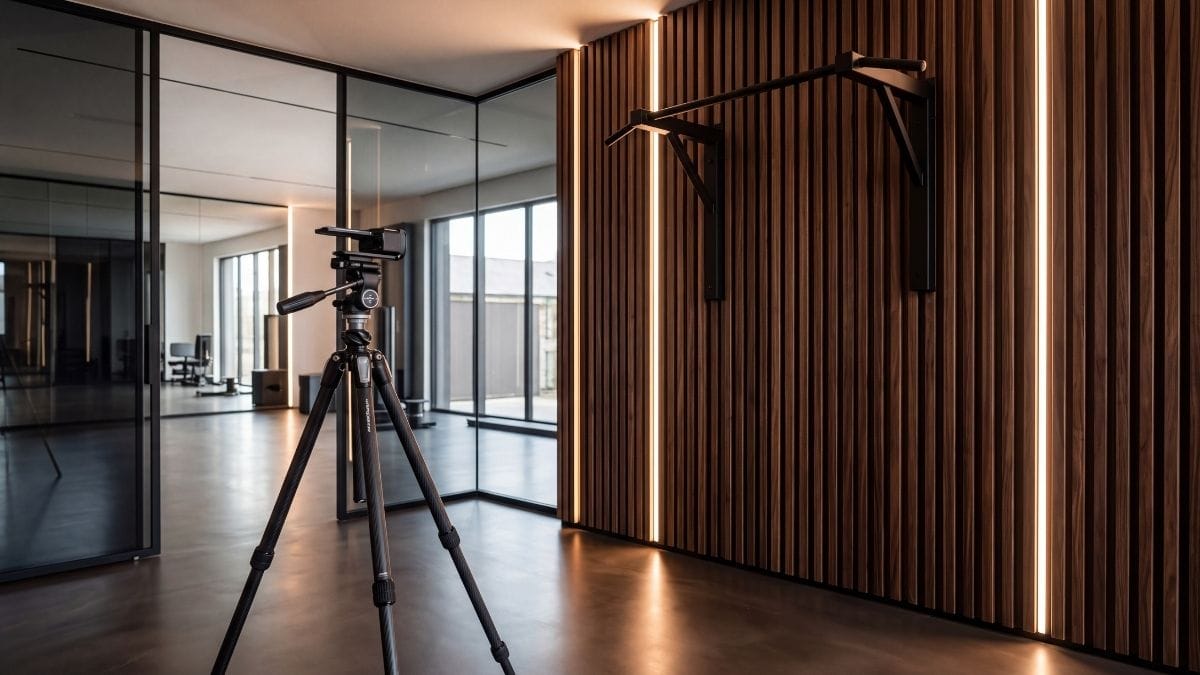
Instead, we work 100% live via Google Meet. You mount your smartphone on a tripod or secure surface roughly 6 to 8 feet away at your home bar, gym rack, or local calisthenics park. I observe your movement in real time, pinpoint your kinetic energy leaks, and provide immediate verbal cues while you are still warm on the bar.
Whether you want surgical eyes on a single working set or need to engineer a weekly volume roadmap that protects your elbows, select the session format below:
1. Live Pull-Up Technique Audit (15-Min) — £62.50
A focused, surgical movement audit designed for athletes who want experienced eyes on their technique to eliminate energy leaks, clean up form, and safeguard their joints.
- Bar Contact & Grip Mechanics: Auditing your hand width, wrist extension, and thumbs-over placement to ensure skeletal hanging rather than forearm over-gripping.
- The Dead-Hang "Bite Point": Checking your scapular engagement and lat pre-tension at the bottom of the movement before you initiate the pull.
- Humeral Path & Elbow Tracking: Eliminating unnecessary elbow flare during the concentric drive to protect the medial epicondyle and common flexor tendons.
- Immediate Corrective Cues: You receive 2–3 specific, high-leverage movement adjustments that you can test and feel immediately during the call.
👉 Book a 15-Minute Live Technique Audit (£62.50) →
2. Pull-Up Volume & Programming Clinic (30-Min) — £125.00
A comprehensive working clinic for athletes looking to scale high-volume endurance, push past stubborn plateaus, transition into weighted calisthenics, or manage joint friction safely.
- Volume Architecture Audit: Deconstructing your current weekly sets, reps, and frequency using the "Reps, Sets, Blocks & Milestones" protocol.
- Plateau Diagnosis: Pinpointing whether your training bottleneck is muscular, autonomic, grip-related, or central nervous system fatigue.
- Tendon Longevity & Recovery Strategy: Actionable soft-tissue habits, antagonist extensor balance, and pacing frameworks to prevent or navigate golfer's elbow.
- Optional Live Form Check: If you have your smartphone positioned by your bar, we can spend 5–10 minutes checking your live technique to verify mechanical efficiency.
👉 Book a 30-Minute Volume & Programming Clinic (£125.00) →
How to Prepare for Your Live Session:
- Mount Your Camera: Set your smartphone on a tripod or stable ledge roughly 6–8 feet from your bar at chest height, angled so your full body (from hands on the bar down to your feet) is clearly visible.
- Check Your Connection: Ensure your mobile data or Wi-Fi signal is strong and stable where your bar is located.
- Warm Up Beforehand: Complete your standard warm-up routine prior to our start time so we can jump straight onto the bar from minute one.
- Have Your Numbers Ready: For the 30-minute clinic, have your current weekly volume, set averages, and key friction points noted down.
Practitioner Disclaimer:
Phil Jessé provides technical movement observations, biomechanical analysis, and endurance pacing frameworks forged across 500,000+ personal repetitions. He is an endurance specialist, not a medical doctor, chartered physiotherapist, or certified personal trainer. These consultations are educational movement audits and programming advisory sessions; they do not constitute clinical medical advice, injury diagnosis, or physical therapy. Always consult a physician before undertaking strenuous physical exertion or if you are experiencing persistent musculoskeletal pain.
Training Resources & Applied Protocols

The intellectual foundation, interactive volume systems, and neuro-somatic recovery practices behind half a million repetitions.
High-volume calisthenics is not an exercise in aimless grinding. It is an engineering discipline.
To sustain elite output over years without burning out your nervous system or tearing your connective tissue, you need clear reference frameworks, honest tracking data, and deliberate biological deceleration when the workout finishes.
Explore the cornerstone manuals, future toolkits, and somatic practices below to support your training:
Cornerstone Essays from the Archive
For deep-dive technical analysis, historical challenge logs, and the philosophical roots of The Bar Raiser Mindset, read through the foundational pull-up essays:
- Mastering Pull-Up Endurance: The 'Reps, Sets, Blocks' System: The full, unabridged masterclass covering advanced powdered chalk application, detailed callus sanding protocols, foot symmetry, and the complete Triangle and Square progression matrix.
- My 100,000 Pull-Up Odyssey: A Journey of Mindset and Muscle: The raw, unfiltered retrospective of completing 100,000 strict repetitions in just 151 days. A deep dive into mental resilience, dealing with skin tears, and navigating the psychological grind of massive milestones.
- 50,000 Pull-Ups: A Case Study in Extreme Resilience: How to design and complete a year-long physical commitment for mental health. Explores how OKR tracking and strict daily pacing turn impossible numbers into inevitable results.
- 500K+ Pull-Ups: Lessons in Mindset & Performance: Moving beyond the physical bar to explore the cognitive and emotional truths uncovered across half a million repetitions.
Interactive Volume Systems & Toolkits
Coming soon: Dedicated downloadable operating tools designed to translate these principles into daily training reality:
- The 500k Pull-Up Volume & Block Calculator: A clean Notion and Google Sheets dashboard that calculates your target sets, reps per set, rest intervals, and cumulative volume based on your current ceiling. Takes the guesswork out of high-volume session design.
- The Neuro-Somatic Tendon & Grip Recovery Protocol: A practical field guide detailing daily active hanging progressions, extensor band routines, forearm fascial release, and collagen remodelling schedules to keep your elbows quiet and functional.
- The Project X Architecture Blueprint: The structured goal-setting framework used to break audacious, multi-month athletic milestones into manageable daily operating targets.
Somatic Down-Regulation: Closing the Training Loop
High-volume pulling places heavy demands on your autonomic nervous system. When you step off the bar after several hundred repetitions, your sympathetic nervous system ("fight-or-flight") remains elevated.
If you jump straight back into high-cognitive-load work or scrolling on your phone, you stay trapped in an adrenaline-fuelled state. Your recovery windows stall, muscle tension remains high, and sleep quality degrades.
To accelerate physical repair and quiet mental chatter, I use and host guided somatic practices on YouTube. These audio sessions require zero active effort—simply lie back and allow steady verbal pacing to down-regulate your autonomic tone:
- Non-Sleep Deep Rest (NSDR) & Somatic Resets (15–20 Mins): A biological circuit breaker to clear mental fatigue and speed up neuromuscular recovery post-workout.
- The Double Five (5-5) Guided Breathwork: Circular breathing sessions designed to lower heart rate variability stress and anchor present-moment focus.
- Pre-Sleep Deactivation Practices: Gentle sensory deceleration routines to transition an overstimulated body into deep, restorative sleep.
🎧 Explore the Free Guided Practices Library on YouTube →
The Manchester Community Bridge: From Global Systems to Local Roots

True mastery is measured not by what you achieve in isolation, but by what you share.
While this global hub is an open digital laboratory for athletes worldwide, physical community remains the bedrock of The Bar Raiser Mindset.
Right in the heart of Manchester City Centre, at Deansgate Square, I run the Manchester Pull-Up Club. It is an altruistic, ego-free community initiative where residents, fitness enthusiasts, and calisthenics practitioners gather to train together, master clean technique, and build collective resilience.
We do not care if you are working toward your very first clean dead-hang or pacing out 500 reps in a single morning. There are no judgements, no paywalls, and no corporate sales pitches. It is simply a shared space where we use the bar to test our mindset and support one another through physical friction.
To demonstrate what is possible when people operate as a unified system, we even took this ethos outside the city to host our flagship 500-Rep Team Challenge at the Delta Hotels by Marriott in Worsley Park.
If you live in or visit Manchester and want to jump on the bar with us, explore the local community below:
🤝 Discover the Manchester Pull-Up Club & Deansgate Square Community →
(Curious how it all began? Read the origin story: Building a Pull-Up Empire in Manchester).
Frequently Asked Questions (FAQs)
What is the best grip for high-volume pull-up endurance?
The pronated grip (palms facing away) with thumbs resting lightly over the bar is the most effective grip for high-volume pull-up endurance. This position minimises forearm flexor strain, prevents excessive wrist curling, and shifts mechanical loading directly onto the latissimus dorsi while protecting your elbows.
Wrapping your thumbs tightly underneath the bar forces intense recruitment of the forearm flexor carpi radialis, fatiguing your grip prematurely and transferring shear stress into your medial epicondyle. Resting the thumbs over the bar allows you to hang skeletal-first from the finger joints, keeping your forearms relaxed so your back can do the work.
How do you build pull-up endurance without getting golfer's elbow?
You prevent golfer’s elbow (medial epicondylitis) by avoiding muscular failure, maintaining a controlled 1.25-second cadence, and eliminating elbow flare. Incorporating decompressive active hangs, using a pronated thumbs-over grip, and training antagonist forearm extensors allows connective tissue to adapt alongside muscle tissue over time.
Most athletes develop elbow tendonitis because muscles remodel in weeks, whereas dense connective tissue takes months. When you train to failure or drop uncontrollably from the bar, the shock load damages unconditioned tendons. Managing volume with sub-maximal clusters and balancing wrist flexors with daily extensor bands keeps your joints quiet.
Why should you limit pull-up working sets to 5 reps for endurance?
Limiting working sets to five strict repetitions prevents central nervous system exhaustion and stops form breakdown before it starts. Accumulating volume through sub-maximal clusters allows you to bank hundreds of high-quality repetitions with identical biomechanics, sparing tendons from the traumatic compensations caused by training to failure.
If your unbroken ceiling is twenty pull-ups, stopping at five feels counter-intuitive. However, taking sets to sixteen or eighteen triggers severe motor unit fatigue, causing elbow flare, spinal extension, and jerky drops. By capping sets at five (20 x 5 = 100), your hundredth repetition looks identical to your first, building endurance without inflammatory joint damage.
The principles discussed are not a substitute for professional advice. Individual results from applying these concepts will vary, as your unique path, choices, and consistent efforts play the most significant role in your experiences. If you require guidance regarding specific personal, financial, medical, or mental health situations, please consult with a qualified professional. Please engage with these ideas responsibly, understanding that you are the architect of your choices and actions.