The Art of Doing Nothing: A Modern Practitioner’s Guide to Wu Wei, Deep Rest, and Stillness
In a culture obsessed with optimisation, 'doing nothing' is not laziness—it is the highest form of cognitive mastery. If your brain treats stillness as an unspoken threat, you aren't bad at relaxing; your nervous system is stuck in output mode. Here is how to safely switch off.
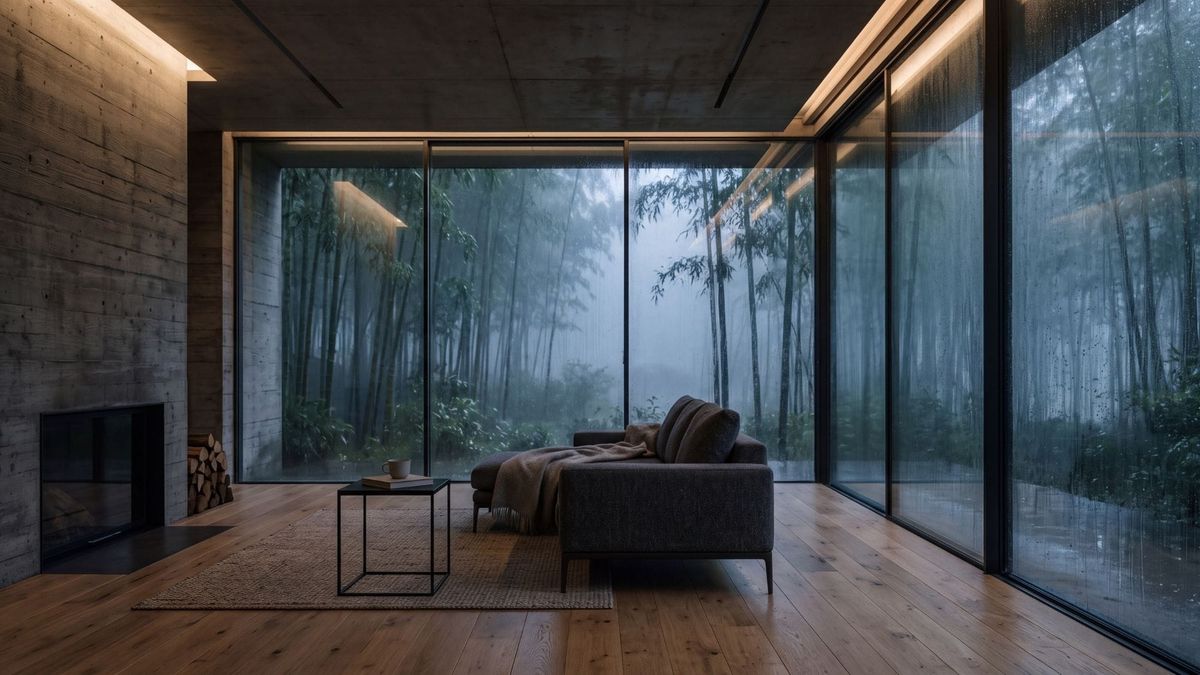
Two words.
DO NOTHING.
When you encounter those two words written together, they land in the mind with a strange, contradictory weight. They feel like a direct command, but simultaneously, they sound like an unfinished, unspoken question.
Do nothing... because?
Do nothing... for how long?
Do nothing... but what am I supposed to achieve?
The moment you attempt to process the concept, you realise the trap: contemplating non-action is itself a cognitive effort. You are actively thinking about doing nothing, which means you are doing something. For the high performer, the entrepreneur, or the neurodivergent individual wired for continuous input, those two words do not signal peace. They signal a challenge.
We live in an age where every waking minute is audited for utility. Rest is rebranded as "recovery protocols," walking is measured in steps and heart-rate variability, and reading is optimised for actionable key takeaways. In this ecosystem of perpetual output, sitting still without an objective feels counter-cultural—almost like a failure of discipline.
Yet, doing nothing is not a void. It is not the absence of value, nor is it the domain of the lazy. When understood through the dual lenses of ancient philosophy and modern neurobiology, learning how to do nothing is the ultimate high-performance skill: the intentional deceleration of an overstimulated nervous system.
Why Is Doing Nothing So Difficult for High Performers?
Doing nothing is the conscious act of removing all external inputs and production demands to allow the nervous system to transition from hyper-vigilant execution into restorative autonomic down-regulation.
Doing nothing is difficult for high performers and neurodivergent minds because a sympathetic-dominant nervous system misinterprets stillness as cognitive friction or a threat. When you operate in perpetual high-beta brainwave activity, constant execution continuously floods the brain with dopamine and norepinephrine, creating a biological dependency on continuous input. For those navigating executive function differences or AuDHD hyperfocus (as I explore in The Superpower Hidden in the Noise), transitioning from high-output executive processing to somatic rest requires deliberate neuro-somatic regulation rather than brute-force willpower.
Most ambitious people do not actually know how to turn off the machine. They substitute work with what can be called active recreation.
When I am alone with an open schedule, my baseline instinct is never to lie down and stare blankly into space. My mind immediately begins generating creative ideas. If my MacBook is sitting within arm’s reach, I will almost certainly open it. I will write, research, analyse emerging technologies, or study how human society and artificial intelligence are co-evolving. If I am not at my desk, I am putting my body through intense physical training—pushing through endurance sessions at the pull-up bar.
I love these activities. They are genuinely fulfilling. But we must be honest with ourselves: this is not doing nothing.
Reading about cutting-edge technology or lifting weights still demands executive processing, sensory consumption, and neural bandwidth. It keeps the sympathetic nervous system engaged under the guise of leisure. As I detail in The Era of Neuro-Somatic Intelligence, you cannot logic your way out of a physiological state; true non-action requires us to strip away the illusion of productive recreation. It forces us to confront the silence that remains when we close the laptop, put down the phone, and remove the requirement to produce, learn, or optimise.
Wu Wei: The Ancient Science of Actionless Action
Long before modern neuroscientists began warning us about the hidden costs of overstimulation, ancient philosophy had already decoded the paradox of effort.
In Taoist philosophy, this concept is known as Wu Wei (無為)—often translated as "actionless action" or "effortless doing." Wu Wei is not a call to sit on the sidelines of life in passive apathy. Rather, it describes a state of profound alignment where effort is stripped of forced friction. It is the recognition that forcing an outcome through relentless, grinding effort often distorts the natural rhythm of performance.
The Taoist text Tao Te Ching poses a simple question:
"Do you have the patience to wait until your mud settles and the water is clear? Can you remain unmoving until the right action arises by itself?"
When a glass of muddy water is continuously shaken, no amount of analytical thinking will make it transparent. The only path to clarity is to set the glass down and do nothing. The mud settles naturally through gravity, not through force.
Similarly, in Stoicism, the concept of ataraxia—an unshakeable state of inner tranquillity—was not achieved by wrestling with one's thoughts, but by stepping back from them (a core pillar I break down in Stoicism for Modern Resilience). The Stoics recognised that the mind, like a muscle, cannot remain in a permanent state of contraction without suffering systemic breakdown.
For the modern practitioner, Wu Wei is the biological permission slip to stop shaking the glass. It is the understanding that non-action is not the opposite of progress; it is the incubation ground for brilliance.
The Couch, the Clouds, and the Deceleration Curve
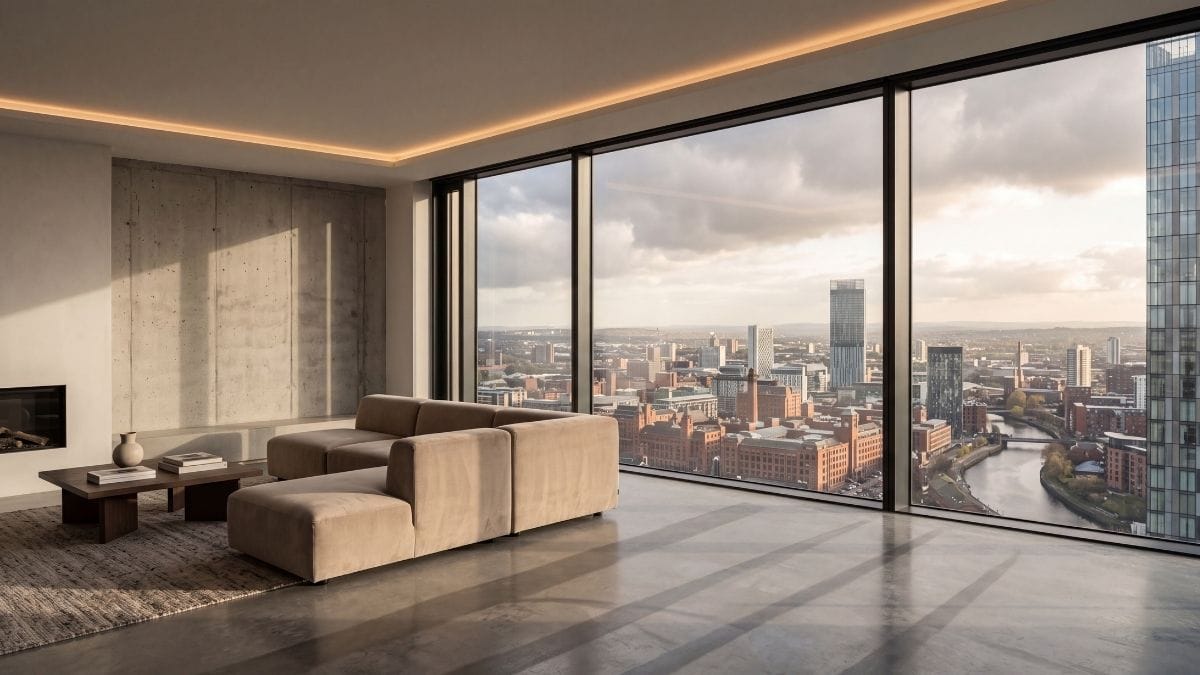
If doing nothing is a skill, what does its actual practice look like in the real world?
It does not require moving to a monastery or retreating from modern society. For me, it happens in my apartment in Manchester.
I am lying on the couch. The afternoon light is streaming through the window, cutting across the room. Outside, the Manchester cityscape stretches out into the distance.
In the first few minutes, the active mind fights the stillness. The impulse to check a notification, open a tab, or write down a sudden thought pulls at my attention—a classic sign of Default Mode Network (DMN) hyperactivity searching for its next task. But if I stay on the couch and refuse the urge to engage, something subtle begins to shift neurobiologically.
I look out the window. I watch the clouds moving slowly across the sky, taking on strange, shifting shapes. My gaze moves to the concrete and glass of the buildings in the distance. I find myself wondering who built those structures, what lives are playing out inside those far-away windows, and what stories are unfolding right now across the city.
Then, the narrative thoughts begin to thin out.
The concept of time—the invisible grid of schedules, deadlines, and next steps—begins to dissolve. Parasympathetic tone begins to dominate; heart rate slows, vagal tone increases, and I drop below the level of intellectual tracking directly into my physical body.
I start to pay attention to my breathing. I feel the rise and fall of my chest. I can feel the quiet, rhythmic beat of my heart in my chest. There is no agenda. No goal to hit. No insight to capture. There is just a neuro-somatic awareness of being present in a room, in a body, while the world moves on outside.
My eyes naturally begin to close.
This experience is what I call the Deceleration Curve. For a neurodivergent or high-performing mind, you cannot simply press a button and expect instant stillness. You must ride the curve down from hyper-focus, passing through gentle curiosity (watching the clouds, observing the city), until the brain registers physiological safety, realising there is no threat, no demand, and no work to be done.
In that moment, 30 minutes of intentional non-action acts as a total system reboot.
Doing Nothing as the Gateway to Deep Sleep
There is a direct, biological connection between your ability to do nothing during the day and your ability to fall asleep at night.
Most people treat bedtime like a cliff edge. They spend their evenings consuming high-octane digital content, answering work messages, or engaging in intense intellectual work right up until the moment their head hits the pillow. Then, they expect their brain to instantly switch off.
When sleep fails to arrive, they assume they suffer from insomnia. But the issue is rarely sleep itself; it is the total absence of a deceleration phase. Trying to force an overstimulated, sympathetic-dominant brain straight into deep sleep is like pulling the handbrake on a vehicle travelling at 100 miles per hour on the motorway. The machinery breaks.
If you want to access deep sleep, you must give your nervous system time to practice sensory withdrawal while you are still awake. You must learn how to clear your cognitive cache before you close your eyes for the night.
(For a deeper look into the neuromechanics of overstimulation and pre-sleep protocols, read The Science of Sensory Withdrawal and explore how tools like The Cognitive Refuel can reset your dopamine baseline).
Practical Protocol: A Guided Practice for Deep Rest and Sleep
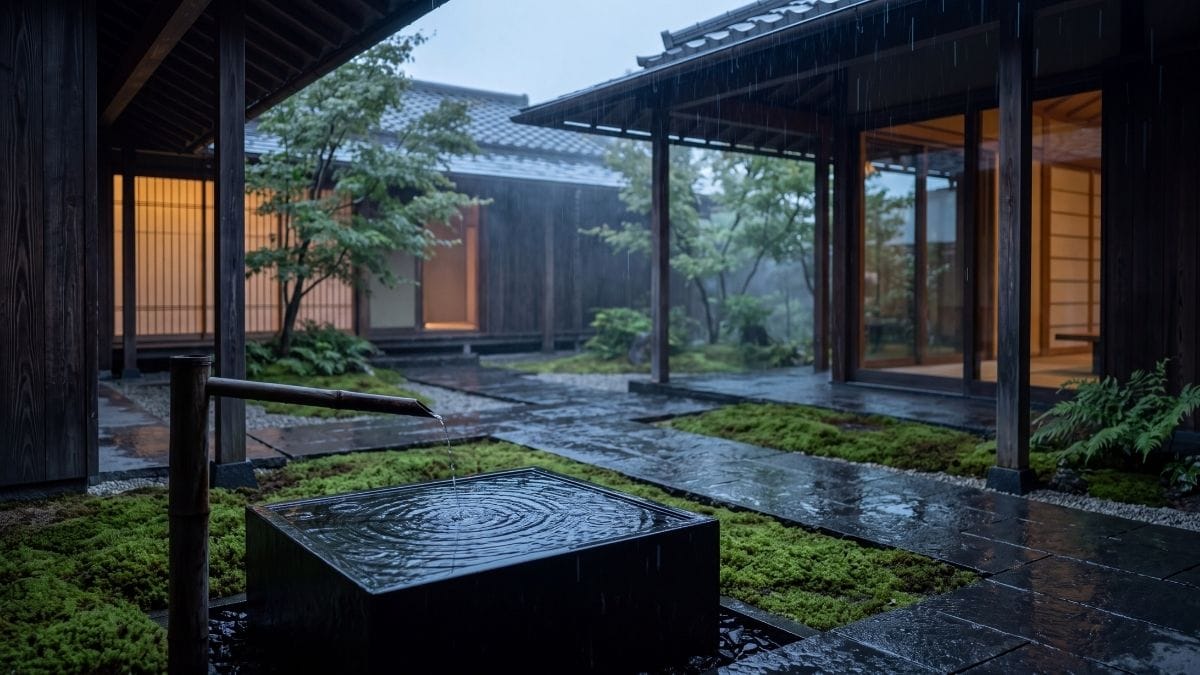
Philosophical understanding is the foundation, but somatic execution is where transformation happens.
If you are familiar with my YouTube channel or Ghost community, you know that when I design guided practices, the environment is just as vital as the breathwork. Space shapes mindset. For this practice, we ground the experience in the visual and sonic stillness of Kyoto—layered with the soothing, natural pink noise of gentle rain designed specifically to slow down your sensory processing.
There is a common misunderstanding when people first encounter Non-Sleep Deep Rest (NSDR) as a sleep tool: If it is called 'non-sleep,' how does it help me fall asleep?
The answer lies in removing the biological pressure to perform. The moment you lie in bed trying to fall asleep, you are performing an action. You are striving for an outcome, which keeps your brain in output mode. NSDR changes the objective. It takes sleep off the table entirely and asks you simply to lie there, listen, and decelerate.
In this 1-hour guided practice, we step into the tranquil energy of Kyoto to systematically down-regulate your autonomic nervous system. By removing the pressure to sleep, your body naturally drops its guard—clearing mental noise and allowing deep, restorative sleep to occur effortlessly as a biological byproduct.
Use this protocol at the end of the day, during moments of severe overstimulation, or when you need to master the art of non-action.
Frequently Asked Questions (FAQs)
What is the difference between doing nothing and being lazy?
Laziness is the avoidance of necessary action due to a lack of intention or discipline. Doing nothing, in a philosophical and neuro-somatic sense, is an intentional, conscious practice of stepping away from input to regulate the nervous system and restore cognitive bandwidth.
How can a neurodivergent mind learn to do nothing without feeling restless?
A neurodivergent mind requires a deceleration curve rather than sudden stillness. Instead of trying to force an empty mind immediately, transition through low-stimulus awareness—such as looking out a window, observing nature, or listening to guided somatic practices—allowing the nervous system time to register safety before entering full rest.
Why does doing nothing make me feel guilty or anxious?
In a productivity-obsessed culture, your identity can easily become tied to output. When you stop producing, your brain misinterprets the absence of action as a failure or a threat. Reframing stillness as necessary mental maintenance helps dissolve this guilt, over time.
The principles discussed are not a substitute for professional advice. Individual results from applying these concepts will vary, as your unique path, choices, and consistent efforts play the most significant role in your experiences. If you require guidance regarding specific personal, financial, medical, or mental health situations, please consult with a qualified professional. Please engage with these ideas responsibly, understanding that you are the architect of your choices and actions.