The Architecture of the Label: Neurodivergence, Cognitive Ergonomics, and the Quiet Cost of Categorisation
We praise the 'obsessive founder' but hesitate around the biology behind it. A diagnosis is societal confirmation, not an operating manual—it offers the label, not the mastery. What matters is what you do with what you know. Here is how to navigate cognitive differences with dignity.


In the span of a single generation, the way we talk about being different has fundamentally transformed.
For decades, non-linear minds were navigated in quiet isolation. If a grandparent struggled with sensory overwhelm, executive burnout, or the exhaustion of sustained social mimicry, nobody spoke of neurochemistry or autonomic baselines. They were spoken of in hushed, polite euphemisms: "highly strung," "chronically eccentric," or having suffered a sudden, inexplicable "nervous breakdown." Families absorbed the daily somatic strain behind closed doors, often carrying an unspoken weight of private confusion.
Today, that silence has broken open.
Everywhere you turn, medical language has entered daily conversation. Terms that once lived exclusively in diagnostic manuals—ADHD, autism, executive dysfunction, sensory overload—are now discussed openly in team meetings, shared across dining tables, and debated in mainstream media.
To some observers, this sudden surge looks bewildering. Sceptics wonder if society is simply pathologising normal human variation or chasing trends. But writing off this cultural awakening as an internet phenomenon misses the profound human reality underneath.
The modern world did not invent neurodivergence; it simply handed millions of people the vocabulary to name a friction they had felt in their bodies since childhood.
When an adult spends forty years feeling perpetually out of rhythm with the world—wondering why fluorescent lighting drains their cognitive reserve, why their focus moves in feast-or-famine bursts, or why simple administrative routines feel like wading through wet cement—finally discovering there is a biological reason for that friction is not a trend.
It is a profound, life-altering exhale.
Yet, as visibility has peaked, genuine understanding has lagged behind. We have more awareness than ever, but we remain trapped in polarising debates: Are we over-diagnosing? Are labels empowering or limiting? And why are high-performing individuals still terrified of admitting how their nervous systems actually work?
To answer that, we have to examine the contradictory way society treats cognitive difference.
What is the Neurodiversity Label Paradox?
The neurodiversity label paradox is the cultural contradiction of celebrating high-performance traits—such as hyperfocus, rapid pattern recognition, and lateral problem-solving—while pathologising or attaching quiet stigma to the underlying neurobiological wiring (such as ADHD or autism) that generates those exact cognitive strengths.

The Selective Praise of Modern Culture
- Celebrated by Culture: "Relentless drive," "lateral problem-solving," "obsessive founder energy," and "thinking outside the box."
- Treated with Hesitation: Autism, ADHD, sensory sensitivity, and executive function fatigue.
Modern industry has an unmistakable double standard. We revere the archetype of the obsessive creator, the non-linear thinker, or the relentless founder. We admire the individual who can sit at a desk for twelve hours straight, entirely lost in the flow of writing code, dissecting market trends, or mastering a physical craft without remembering to eat or look away. We praise their ability to connect disparate ideas that traditional thinkers fail to see.
Yet, the moment those exact behaviours are linked to their underlying biology—when hyperfocus is identified as dopamine regulation in an ADHD nervous system, or deep pattern recognition is recognised as autistic monotropism—the atmosphere shifts.
Instantly, the trait risks being reframed from an asset into an administrative risk.
You can observe this quiet hesitation across corporate boardrooms, sports environments, and creative agencies. High performers will readily joke about their "chaotic creative process," their impatience with rigid meetings, or their erratic energy rhythms. But suggest seeking a formal assessment, and the defences go up.
That hesitation does not stem from ignorance or denial. It comes from a justified wariness of the box.
High performers understand that while the modern world celebrates the outputs of an unconventional mind, legacy institutions still struggle to accommodate the biological operating system required to produce them.
Cognitive Ergonomics: When Legacy Workplaces Meet Non-Linear Minds

Most modern workplace models were not engineered maliciously; they were simply designed for an industrial era that prioritised uniformity over agility.
The mid-twentieth-century blueprint assumed every person was an interchangeable unit of production. It presumed that every worker arrived with identical sensory tolerances, identical energy rhythms, and an equal ability to sustain linear, predictable output inside an open-plan office.
When a non-linear mind steps into that legacy environment, the somatic friction begins the moment they walk through the office door.
An open-plan office is not just a room; to an overstimulated nervous system, it can feel like constant sensory overload. Decades of research in autonomic regulation tell us that filtering out background chatter, peripheral motion, and harsh overhead lighting requires continuous cognitive suppression. For an AuDHD nervous system, up to forty percent of the day’s cognitive bandwidth can be used simply trying to keep the sensory alarm bells quiet—long before high-leverage intellectual work even begins.
Where the Industrial Template Stalls
- Rigid Schedules vs. Non-Linear Cadence: Rigid 9-to-5 schedules penalise minds that operate in intense, high-output focus sprints followed by periods of biological recovery.
- Sensory Overload vs. Cognitive Bandwidth: Ambient phone calls, fluorescent glare, and constant micro-interruptions drain executive function reserves prematurely.
- Procedural Admin vs. Complex Problem-Solving: Forcing high-level pattern spotters through repetitive administrative checklists causes acute executive fatigue.
- Surface Presenteeism vs. High-Leverage Impact: Standard evaluation models frequently reward visible social conformity over tangible commercial breakthroughs.
This mismatch is no longer an abstract topic for HR conferences; it is an operational performance issue. Forward-thinking organisations understand that adjusting an environment is not an act of charity. It is an act of Cognitive Ergonomics.
Just as an organisation invests in ergonomic chairs to protect spinal health and prevent physical injury, introducing cognitive ergonomics protects the nervous systems of your sharpest thinkers.
In the UK and internationally, employment law recognises neurodivergence under legal protection frameworks. Crucially, the duty to provide reasonable adjustments does not require an employee to present an exhaustive medical dossier after five years on a clinical waiting list. Good practice begins the moment friction is identified: having an open, adult dialogue about what an individual needs to regulate their baseline and perform at their best.
As I explored in The New Intelligence Stack: Why the Future Belongs to the 'Human' Mind, as routine linear processes are increasingly automated by AI, an organisation’s most defensible commercial asset is human synthesis: lateral pattern recognition, creative leaps, and deep monotropic focus.
If a workplace penalises the people who generate those breakthroughs, the issue does not lie within the individual. It lies within an outdated working environment.
The Reality of Late Diagnosis: Opening the Old Files
Discovering you are neurodivergent in adult life is often thought of as a cinematic breakthrough—a single moment where everything falls into place and life instantly becomes clear. The lived reality is far more demanding.
My own path unfolded in stages. The autism diagnosis came first; the ADHD diagnosis followed later, confirming the combined profile known as AuDHD.
The assessment process is an intense personal audit. It rarely begins by chance. It usually starts with quiet late-night research, reading clinical studies, and having honest conversations with a GP. Then come the waiting lists, followed by detailed diagnostic questionnaires asking for an unsparing examination of your formative years.
The Diagnostic Process
- The Recognition: Identifying persistent friction, followed by consulting medical specialists.
- The Assessment: Working through extensive screening forms, developmental histories, and clinical interviews.
- The Personal Audit: Looking back honestly at childhood struggles, sensory meltdowns, and social misunderstandings.
- A Clearer Perspective: A permanent shift in self-understanding, offering context for your past and clarity for your future.
To complete an adult assessment, you have to look directly into seasons of your life that you may have spent years trying to move past. You review your school reports and childhood experiences under a bright clinical light: the sensory meltdowns that were dismissed as bad behaviour, the acute social misunderstandings, and the quiet, persistent feeling of observing the world from behind glass.
It takes a significant amount of energy. Going through those weeks of assessment was demanding, but for me, it was worth every bit of the effort. You are re-examining moments from your past when you had neither the language nor the tools to protect your nervous system.
Yet once you have gone through this process, you cannot unsee it.
When the assessment concluded, decades of friction fell into place. Experiences I had previously thought of as personal inadequacy turned out to be the predictable responses of an overstimulated nervous system.
For me, it was never about needing an excuse. I didn't need the diagnosis—I wanted it. I chose to go down this path, and it sparked a deep desire to learn more about myself, about human behaviour, and about how we interact within society. It put me on an intentional path of self-discovery.
Yet we must be clear about what an assessment actually provides.
A diagnosis is societal confirmation; it is not an operating manual.
Securing the paperwork gives you the clinical name, but it does not hand you the wisdom or the daily routines to manage your biology. Expecting a diagnosis to resolve your executive friction is like strapping an advanced biometric watch to your wrist and expecting it to manage your health for you. You can wear a smart watch or a fitness tracker every day, but if you never learn how to interpret the sleep stages, read the heart-rate variability, or act on the recovery telemetry, all you have is an expensive piece of glass and silicone wrapped around your wrist. The hardware collects the data and the platform provides the knowledge, but if you do not do the work to understand what the metrics mean, the tool remains inert.
The exact same principle applies to diagnostic reports. A formal label confirms your hardware, but learning how to pace your attention, down-regulate an overstimulated nervous system, and create your daily environment is the ongoing craft of the individual.
It is never what you are handed that determines your trajectory; it is what you choose to do with what you know.
As I shared in The Superpower Hidden in the Noise: How I Channel AuDHD for Ultra-Endurance and Focus, the objective is never to pathologise your wiring. The objective is to stop forcing yourself into moulds that were never designed for you—and to start creating an environment where you can truly thrive as a human.
Beyond the Stereotypes: The Soundboard Model
One of the greatest misunderstandings in modern conversations about neurodivergence is treating it as a single, uniform experience.
There is a wise phrase used in neuro-affirming spaces: when you have met one autistic person, or one person with ADHD, you have met precisely one person.
Popular culture usually swings between two unhelpful extremes: either someone who struggles to navigate daily life at all, or a savant counting dropped matchsticks like Dustin Hoffman in Rain Man. While genuine savants exist, focusing solely on the extremes erases the nuanced, everyday reality where most high-functioning adults live.
The spectrum is not a linear slider moving from "mild" on the left to "severe" on the right. A much more practical and human way to picture it is an audio mixing desk—a Soundboard.
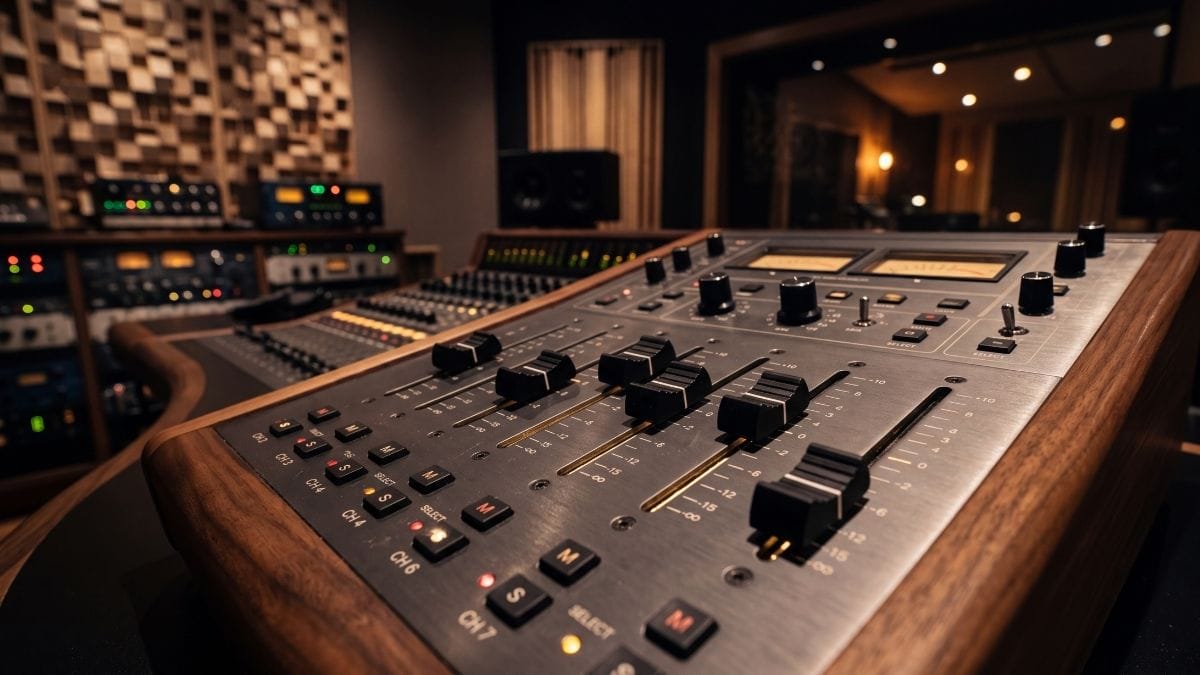
Each person arrives with their own unique configuration of biological sliders:
- Executive Cadence: Balancing linear administrative routines against the ability to produce deep, high-output sprints of focused work.
- Sensory Processing: High sensitivity to loud noise, bright lights, or chaotic environments, balanced by acute environmental awareness and physical stamina.
- Pattern Recognition: An instinct for connecting disparate ideas, spotting market trends, and finding solutions where traditional linear thinking stalls.
- Social Masking: The daily energy spent monitoring and adapting natural behaviours to meet standard social expectations.
- Somatic Grounding: The physical movement—such as endurance training, weight lifting, or breathwork—required to down-regulate a buzzing autonomic baseline.
No two people share the same configuration. Trying to compress that entire mixing desk into a single clinical acronym misses the individual completely. The sliders do not dictate what someone is capable of achieving, nor do they mean everyone can navigate their baseline in isolation. They simply map where your sensory and energy demands begin—giving you, and the people around you, a clearer understanding of what is needed to thrive.
The Narrow Circle: The Reality of Sharing and the Quiet Handshake
Deciding who to tell about a diagnosis requires care and discernment.
When my formal assessments were complete, I shared the news with close family, followed by a handful of trusted friends. What followed was a quiet masterclass in human behaviour.
I can count on one hand the people who genuinely leaned in.
Those few asked thoughtful, constructive questions: How does this make you feel, now that you have the diagnosis? Can we do anything to support you? What does this mean for you?
Most people, however, said very little.
That silence was rarely unkind. It was simply awkward. Culture has handed people clinical labels without giving them the conversational tools to talk about them comfortably. Most people simply do not know what to say. They wonder whether to offer congratulations, express sympathy, or swiftly change the subject. Out of fear of saying the wrong thing, they say nothing at all.
Yet, there is an entirely different connection that happens between people who share similar wiring: the quiet handshake.
You can be in a work environment, at an event, or sharing dinner with a group of people. You meet someone whose nervous system operates on that same non-linear frequency. A passing observation about sensory fatigue, a shared laugh about hyperfocus rabbit holes, or a brief nod of understanding. The moment lands.
Both people recognise the cadence, and immediately, the room feels different.
The exhausting, constant effort of social camouflaging—known as masking—quietly falls away. As I wrote in The Architecture of the Mask: Why 'Faking It' is Actually High-Performance Communication, hiding your natural traits carries a heavy metabolic cost. Finding someone who speaks your language without needing subtitles is rare, and the biological relief is instantaneous.
In a world full of noise and surface interactions, that quiet mutual recognition is deeply grounding. As explored in The Art of Being Understood: Navigating the Labyrinth of Human Connection, true connection does not require universal approval; it simply requires a small circle of people who truly see how you work.
To Label or Not: A Question of Choice
This brings us to the core consideration: does naming your traits provide greater freedom, or does it construct a new cage?
The answer rests entirely on personal choice.
For many, securing a formal diagnosis is transformative. It provides vital societal confirmation—establishing legal protection at work under the Equality Act, accessing essential healthcare and carer frameworks, and putting an end to decades of damaging self-reproach. For individuals who require external adjustments or institutional recognition simply to navigate daily life, that clinical confirmation is not a luxury; it is a practical necessity. It replaces the exhausting assumption that you are broken with the clear reality that your nervous system runs on a different cadence.
At the same time, we must have equal respect for those who look at diagnostic labels and decide they are not for them.
There are many people who clearly display neurodivergent traits yet choose not to pursue formal assessment or use the terms publicly. They look at modern culture—where individuals are frequently reduced to acronyms and categories—and prefer to remain unlabelled. They do not want a clinical term defining how they perceive their own potential, nor do they wish to navigate the assumptions of others.
That decision is completely valid. Categories should always serve the person, never the other way around.
The Bar Raiser Principle on Labels
A diagnosis is societal confirmation, not a finished operating manual. A label is an index card, not an identity—a tool for understanding your baseline, not a ceiling on what you can achieve. True dignity lies in personal agency: acknowledging that what matters is not the label you carry, but what you choose to do with what you know.
Personal choice does not mean having to navigate life in complete isolation. Support needs vary significantly across the population. For many, managing daily executive tasks or severe sensory overload is not a solo endeavour; it relies on trusted partners, supportive families, medical specialists, and carers. Acknowledging when you require support is not a sign of weakness; it is honest, practical self-awareness.
Understanding yourself—whether you are navigating autism, ADHD, or any other form of neurodivergence—is never about telling anyone else how they should live. It simply provides a starting point for your own journey of self-discovery. It helps you see where your strengths lie, where your challenges occur, where you need to protect your energy, and when asking for help is the smartest move you can make.
Whether you formalise that knowledge through a clinic, share it openly, or keep it as quiet personal wisdom, the choice remains yours.
Living with Quiet Dignity

We will not move the conversation around neurodiversity forward by retreating to ideological corners—neither by writing off cognitive difference as an internet trend, nor by reducing human capability to a collection of clinical acronyms.
Labels are functional filing systems. They are helpful for medical frameworks, legal protections, and workplace accommodations, but they can never capture the depth of an individual human being.
Whether you carry a formal diagnosis, recognise your traits through quiet self-awareness, or choose to leave the labels behind, the path forward remains the same:
Take the time to understand yourself. Protect your focus and mental bandwidth. Drop the mask when you are in the company of those you trust, and build an environment where you can live authentically, with quiet, unshakeable dignity.
Frequently Asked Questions (FAQs)
Do I need a formal diagnosis to request workplace adjustments?
In UK employment law under the Equality Act 2010, an employer's duty to provide reasonable adjustments depends on whether they are aware of a substantial barrier impacting your work, not whether you have completed medical paperwork. If you are experiencing operational friction—such as open-plan sensory overload or schedule rigidity—forward-thinking managers are encouraged to collaborate on practical workplace solutions directly, rather than making support contingent on multi-year clinical waiting lists.
Why is the adult AuDHD assessment process so demanding?
An adult assessment requires an unsparing personal audit of your developmental history. Working through childhood memories, mislabelled disciplinary events, and decades of subconscious masking forces you to re-examine periods of life where your nervous system was unsupported. Processing that history while managing current daily demands requires significant cognitive and nervous system energy, often creating a temporary phase of fatigue before genuine self-awareness takes hold.
What is the difference between neurodivergent traits and a clinical diagnosis?
Cognitive traits such as hyperfocus, sensory sensitivity, and lateral thinking exist across the entire human population in varying degrees. A clinical diagnosis is established when those traits occur with sufficient intensity and frequency to create ongoing friction in standard educational, workplace, or social environments. Many individuals understand their traits and manage their environments effectively without ever requiring or seeking a formal clinical label.
The principles discussed are not a substitute for professional advice. Individual results from applying these concepts will vary, as your unique path, choices, and consistent efforts play the most significant role in your experiences. If you require guidance regarding specific personal, financial, medical, or mental health situations, please consult with a qualified professional. Please engage with these ideas responsibly, understanding that you are the architect of your choices and actions.